REJUVA SOLE™
Rise Above the Ache™
Rise Above the Ache™
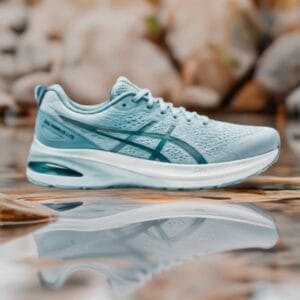
The GEL-Kayano Lite was the stability-focused choice; the GEL-Nimbus Lite was the neutral, softer-cushioned choice. That is the most useful difference between them. Neither line is current, however, and the exact weight, heel-to-toe drop, fit, and construction changed by generation and gender. If you find a pair now, check the full model name and style number instead of relying on “Kayano Lite” or “Nimbus Lite” alone.
How this comparison was created: I have not personally tested the ASICS GEL-Kayano Lite or GEL-Nimbus Lite. This is a research-based comparison that combines official archived specifications with the practical questions I ask as someone who lives with neuropathy, chronic pain, and mobility limitations. I will never claim firsthand shoe experience I do not have.
Affiliate disclosure: As an Amazon Associate, I earn from qualifying purchases. If you buy through a link on this page, I may earn a commission at no additional cost to you. That never changes what I say about a shoe.
Legacy-model alert: ASICS explicitly labels the GEL-Kayano Lite 2, GEL-Kayano Lite 3, and GEL-Nimbus Lite 3 as discontinued. The current U.S. GEL-Nimbus Lite 2 pages show that model as N/A or unavailable rather than explicitly calling it discontinued, so I treat it as a legacy model that is no longer part of ASICS’ current active lineup. Remaining stock may be old, limited, or sold by third parties. The current full GEL-Kayano and GEL-Nimbus shoes are much newer designs, so do not assume they will fit or feel exactly like these Lite versions.
| Question | GEL-Kayano Lite | GEL-Nimbus Lite |
|---|---|---|
| Basic category | Stability-oriented road shoe | Neutral road shoe |
| Ride goal | Cushioning with guidance and a more planted platform | Softer cushioning without the same stability focus |
| Likely better match | Someone who wants a supportive feel or has been advised to try a stability shoe | Someone with a neutral gait who values cushioning and does not want added guidance |
| Main tradeoff | The guidance and secure feel can be too controlling for some feet | The softer, less structured ride may not feel predictable enough for someone who needs more guidance |
| Status | Discontinued legacy Lite line | Legacy Lite line; Lite 2 is currently unavailable from ASICS U.S. |
The word Lite can make these sound like two versions of the same shoe, but they served different purposes. The Kayano Lite kept the Kayano family’s stability emphasis while using a streamlined construction. The Nimbus Lite was built around neutral cushioning and a lighter-feeling interpretation of the Nimbus line. Cushioning and stability are not the same thing, and more cushioning does not automatically make a shoe safer or more supportive.
The original Rejuva Sole article linked to GEL-Kayano Lite 2 products, so Lite 2 is the cleanest like-for-like example. These figures are examples for the exact models named, not universal specifications for every Kayano Lite or Nimbus Lite.
| Archived official example | Support listing | Heel drop | Listed weight |
|---|---|---|---|
| Men’s GEL-Kayano Lite 2, style 1011B217 | Neutral / Stability | 10 mm | 289 g / 10.2 oz |
| Women’s GEL-Kayano Lite 2, style 1012B071 | Neutral / Stability | 13 mm | 245 g / 8.6 oz |
| Men’s GEL-Nimbus Lite 2, style 1011B009 | Neutral | 8 mm | 258 g / 9.1 oz |
| Women’s GEL-Nimbus Lite 2, style 1012A882 | Neutral | 11 mm | 221 g / 7.8 oz |
That men’s-versus-women’s difference is important. I would not transfer a men’s drop or weight to the women’s shoe, or the other way around. Archived official pages I checked displayed Standard width on specific color pages, but that does not prove one universal historical width range across every SKU, market, generation, or remaining-stock listing. Check the exact label inside the shoe and the seller’s SKU before buying.
The Kayano Lite’s useful idea was to create guidance through its shape rather than leaning on a hard, old-fashioned post. ASICS described the Lite 2 with a full-contact outsole, a stable platform, FLYTEFOAM cushioning, and gender-specific 3D SPACE CONSTRUCTION intended to support pronation. Later Lite 3 descriptions continued the stability theme.
In practical terms, I would expect the Kayano Lite to feel more guided and planted than the Nimbus Lite. That can be reassuring if your foot rolls inward and a stability shoe agrees with your gait. But “stability shoe” does not mean “fall-prevention shoe,” and a feature that feels supportive to one person can feel intrusive to another. If you underpronate, have a very rigid foot, or dislike guidance under the arch, the Kayano Lite may be the wrong direction.
A secure upper and heel can help a shoe feel controlled, but they can also become pressure points when feet swell or when bunions and toe deformities need more room. Because remaining stock varies, verify the exact width, internal depth, and insole removability for the SKU you are considering. A width label alone does not tell you whether a custom orthotic or AFO will fit. Anyone using a brace should compare the brace’s volume and entry needs with the actual shoe, preferably with professional fitting help.
The Nimbus Lite was the neutral option. ASICS described the Lite 2 with FLYTEFOAM, forefoot and rearfoot GEL cushioning, a full-ground-contact design, and a soft, lightweight ride. That could make it more appealing to a neutral runner or walker who wants cushioning without the Kayano Lite’s stability emphasis.
The gray area is that soft cushioning can feel wonderful underfoot without solving a guidance or balance problem. Some people feel confident on a compliant midsole; others feel as though the shoe moves too much beneath them. The Nimbus Lite was not a motion-control shoe, and it should not be described as one just because it had a broad-looking sole or full-ground contact.
The archived U.S. Lite 2 pages I reviewed showed Standard width on the listed colorways. That is not enough evidence to promise Standard-only availability everywhere, and it is not evidence of extra depth. People with swelling, braces, thick orthotics, or a very wide forefoot should be especially cautious with old stock because size exchanges may be limited.
Neither shoe treats arthritis, fibromyalgia, neuropathy, back pain, knee pain, obesity, or a balance disorder. A shoe can change pressure, cushioning, fit, traction, and how guided a step feels, but those effects are individual. With reduced sensation, a hidden pressure point can matter even when the shoe feels soft. With swelling, a secure upper can become too tight. With balance concerns, a cushioned neutral shoe can feel comfortable to one person and unstable to another.
If you have numbness, skin breakdown, circulation concerns, repeated falls, an AFO, or a prescribed orthotic, the safest choice is to involve the clinician or fitter who understands your feet. For a current stability-shoe discussion, see my Brooks Adrenaline GTS 25 review. If you need more adjustable depth and configuration-dependent width options, the Orthofeet Kita review may be a more relevant comparison.
These two product cards were part of the original Rejuva Sole article and match the GEL-Kayano Lite 2. They are preserved for readers checking remaining stock. Verify the seller, exact style number, width, condition, and return policy before ordering. I did not restore the old “Nimbus” cards because one was actually a GEL-Nimbus 19 LITE-Show and the other repeated the women’s Kayano Lite 2; neither was a truthful Nimbus Lite card.
I compared archived official ASICS product pages rather than copying a retailer’s combined listing. Useful source pages include the official Shop the men’s version through Rejuva Sole (affiliate), and Shop the women’s version through Rejuva Sole (affiliate). Product pages can disappear or change, which is another reason to verify the exact pair in front of you.
The GEL-Kayano Lite is the stability-oriented shoe. The GEL-Nimbus Lite is a neutral cushioned shoe. That does not make the Kayano Lite universally safer; the right choice depends on your gait, foot shape, sensation, and whether added guidance feels helpful.
The GEL-Nimbus Lite was designed around a softer neutral cushioning experience, while the GEL-Kayano Lite combined cushioning with more guidance. Softness is not the same as stability, and some people feel less secure on a more compliant platform.
ASICS explicitly labels the GEL-Kayano Lite 2 as discontinued. The current U.S. GEL-Nimbus Lite 2 pages show it as N/A or unavailable but do not explicitly call it discontinued, so I describe it as a legacy model that is no longer part of ASICS’ current active lineup. Remaining stock may still appear through third-party or secondary-market sellers, but availability, age, widths, and return options vary.
I could not verify one universal historical width range across every generation, gender, color, market, and remaining-stock SKU. The archived U.S. Lite 2 color pages I checked displayed Standard, but that should not be extended to every version. Confirm the exact style number and width printed on the pair you are considering.
Do not assume either shoe has enough removable volume for your device. Verify the exact pair’s insole, depth, opening, heel hold, and width. An orthotic can also change the shoe’s fit or duplicate its guidance. A bulky AFO may require a purpose-built extra-depth or adaptive shoe instead.
No. Footwear can affect comfort, pressure, traction, and support, but neither model diagnoses, prevents, cures, or treats a medical condition. New or worsening pain, numbness, swelling, skin changes, or fall risk deserves professional advice.
No. I have not personally tested the ASICS GEL-Kayano Lite or GEL-Nimbus Lite. This comparison is based on official archived specifications and my research into how cushioning, guidance, fit, and shoe geometry may affect different readers.
If you are comparing these two legacy shoes, start with your actual support need—not the condition name on a sales page. The Kayano Lite makes more sense when you want stability guidance and already know that style of shoe suits you. The Nimbus Lite makes more sense when you have a neutral gait and want softer cushioning without the same guidance.
What matters most to me is a secure heel, a predictable base, and cushioning that does not make the person wearing it feel less in control. That is why I keep coming back to this point: the softest shoe is not always the safest shoe. Neither model is automatically good or bad; the honest answer sits in the fit, the gait match, the exact generation, and how you move in it.
Try footwear indoors on a clean surface while the return window is open. Check toe room, heel movement, pressure points, traction, and stability with the socks, orthotic, or brace you actually use. Stop if you notice pain, numbness, skin irritation, new pressure, or a feeling of instability.
I am not a physician, nurse, podiatrist, or other medical professional. Rejuva Sole provides educational information based on lived experience and product research. It is not medical advice, diagnosis, or treatment. Ask a qualified professional about symptoms, fall risk, circulation concerns, braces, orthotics, or footwear needs specific to you.