REJUVA SOLE™
Rise Above the Ache™
Rise Above the Ache™
Affiliate disclosure: As an Amazon Associate, I earn from qualifying purchases. If you buy through a link on this page, I may earn a commission at no additional cost to you. Affiliate relationships do not change my conclusions. You can read my full affiliate disclosure.
How this review was created: I have not personally tested the Orthofeet Kita. This is my independent, research-based review, built from the current manufacturer specifications, the shoe’s design, fit options, and the practical questions Rejuva Sole readers bring to supportive footwear.
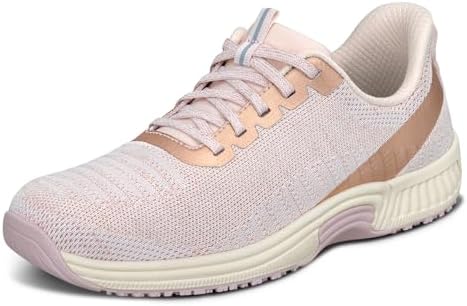
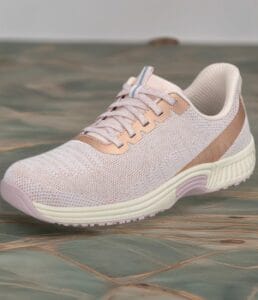
My short take: The women’s Orthofeet Kita is a cushioned, hands-free walking shoe with a stretch upper, a roomy toe box, configuration-dependent width availability, and several ways to adjust the fit. Its best reason for existing is simple: once the laces are set, you can step in without retying them every time.
The important tradeoff: Hands-free convenience is not the same thing as maximum stability. The Kita may be very useful when reaching your feet or managing laces is difficult, but its cushioned ride, 15 mm heel-to-toe drop, stretch upper, and step-in heel will not feel secure or natural to everyone. I would only keep it after a careful indoor trial.
The Kita is a current women’s hands-free sneaker for everyday walking, errands, travel, and standing. Orthofeet describes it as a shoe you tie once and then step into. That is a genuinely useful idea—not just a novelty—if bending, hand dexterity, stiffness, or mobility makes ordinary laces a daily nuisance.
Here are the specifications I could verify on the current U.S. Orthofeet product configuration:
Orthofeet currently calls the fit true to size, but that is a general brand statement, not a promise for your foot. Colors, remaining stock, and available size-width combinations can change, so check the exact configuration before ordering.
One of the most useful ideas in the original Rejuva Sole review was that comfort is only part of the problem. You also have to get the shoe onto your foot. If bending to tie laces is awkward, a supportive shoe can sit unused simply because putting it on is too much trouble.
The Kita answers that problem with a reinforced step-in heel and laces that can stay adjusted. For the right wearer, that may make getting out the door easier and more independent. I would not say it universally “eliminates bending,” though. Some people may still need to steady the shoe, adjust the tongue, use a shoehorn, or sit down. Others may not be able to press down into a hands-free heel safely while standing.
That gray area matters. A hands-free shoe is only helpful if you can enter it safely and the heel holds once you are in. If balance is a concern, try the step-in motion beside a stable counter or while seated rather than assuming the marketing description fits your situation.
Orthofeet builds the Kita around its multi-layer Ortho-Cushion system and contoured insole. The original review correctly recognized that this is meant to feel softer and more forgiving than a firm, traditional motion-control shoe. That may be pleasant for walking and standing, especially if you dislike hard midsoles.
But more cushioning does not automatically mean more support, and it certainly does not guarantee pain relief. Softness can reduce the harsh feeling of impact for some wearers; for others, a softer platform can feel less predictable. The Kita has a broad-looking base and a shaped heel, yet Orthofeet does not present it as a maximum motion-control model.
The listed 15 mm drop is also worth noticing. That is a substantial difference between heel and forefoot. Some walkers enjoy the forward transition; others—especially people used to flatter shoes—may feel pitched forward or simply find the geometry unfamiliar. Drop is not “good” or “bad” by itself. It needs to agree with your gait, comfort, and clinician’s advice if you have a specific problem.
Orthofeet’s current width choices are not identical across every Kita color page. At the time checked, Black showed Medium (B), Wide (D), and X-Wide (2E); Gray showed those choices plus XX-Wide (4E). That makes both examples configuration-specific, not a universal width promise. Availability can also change by size and stock. Whatever choices appear on your exact listing, remember that width and volume are not the same: a wider forefoot does not guarantee enough room over a high instep, and choosing a larger width can make the heel too loose.
The stretch upper and roomy toe-box shape may be kinder to mild bunions, hammer toes, or day-to-day size changes than a rigid upper. Still, “stretch” should not be read as unlimited accommodation. Significant swelling, a prominent pressure point, reduced sensation, or fragile skin deserves a much more careful fit check. A seam or edge you barely notice can matter if your feet do not give you a reliable warning.
Orthofeet includes removable spacers specifically to take up extra interior room and help with heel slippage. That is a thoughtful feature for a shoe that must balance easy entry with a secure hold. It also means the best setup may take a little experimenting. Try both shoes, because many of us have one foot that fits differently from the other.
The original review praised the Kita’s heel lockdown. I am keeping the useful concern behind that observation, but not treating it as proven for every wearer. Orthofeet says the heel structure is designed to cradle the foot and the fit spacers can reduce slippage. Your result will depend on heel shape, width choice, sock thickness, swelling, and how tightly the laces were initially set.
Watch for the heel lifting, the foot sliding forward, or the toes gripping to keep the shoe on. Those are signs that convenience may be costing you security. On the other hand, if the heel grips too aggressively, the step-in action may be frustrating or rub the back of the foot. The sweet spot is easy entry without movement once you walk.
The included orthotic insole, Arch Booster, and spacers give you more fit choices than a simple fixed-insole slip-on. The Arch Booster slides under Orthofeet’s insole for extra arch lift. More arch pressure is not automatically better, so start conservatively and remove it if it creates a hard spot or changes your gait in an uncomfortable way.
If you use a custom orthotic, compare its thickness and heel cup with the supplied insole before swapping anything. The shoe still needs enough depth for your foot, and the heel must remain securely seated. Do not assume that choosing a wider available size solves a depth problem.
I could not verify an official claim that the Kita is AFO-compatible. A rigid brace can change the width, depth, entry angle, and heel fit dramatically, and a hands-free heel may work against the way a particular brace needs to enter the shoe. If you use an AFO or another brace, check the exact combination with your orthotist or footwear specialist rather than relying on the “orthopedic” label.
Orthofeet labels the Kita slip-resistant and water-repellent. Those are helpful everyday features, not guarantees. Water-repellent fabric may handle light rain or splashes, but it is not waterproof. Wet tile, oil, ice, steep slopes, and loose gravel can defeat almost any outsole.
This looks better suited to ordinary indoor surfaces, sidewalks, errands, and maintained walking routes than rugged trails or uneven ground. If you need work-shoe traction that meets a specific testing standard, verify that standard for the exact Kita SKU before buying; I did not find a certification on the current product page that I could independently confirm.
The Kita is a good example of why I do not like declaring a shoe universally “best.” The reinforced heel may make it easier to put on, but that same structure can make the heel feel too firm or too loose depending on your shape. The stretch upper can reduce pressure, but a very flexible upper may not be enough for someone who wants firm containment. The cushioning can feel kind underfoot, but softness can also feel vague to a balance-sensitive walker.
Even the extra fit pieces have two sides. Spacers and an Arch Booster can improve the match, but they also mean you may need to experiment instead of expecting a perfect fit straight from the box. None of those tradeoffs makes the Kita a poor shoe. They simply make it a shoe that should be matched to the person, not to a list of diagnoses.
If you like Orthofeet but do not need hands-free entry, compare the Orthofeet Coral review. Coral is a more conventional lace-up choice; Kita’s clearest advantage is the step-in design.
No. I have not personally tested the Orthofeet Kita. This is an independent, research-based review using current manufacturer specifications, design analysis, and the practical footwear questions I consider for Rejuva Sole readers.
There is no single universal width range across every current Kita configuration. At the time checked, Orthofeet’s Black page showed Medium (B), Wide (D), and X-Wide (2E), while the Gray page showed those choices plus XX-Wide (4E). Availability varies by color, size, configuration, and current stock, so verify the exact selection you are ordering.
Not for everyone. The heel is designed so you can step in after setting the laces, but some wearers may still need to sit, steady themselves, adjust the shoe, or use a shoehorn. The safest method depends on your balance and mobility.
A custom orthotic may work if there is enough width and depth after adjusting the supplied insole and spacers. I could not verify official AFO compatibility. A brace changes the space and entry angle, so check the exact shoe-and-brace combination with your orthotist or footwear specialist.
No. Orthofeet describes the upper as water-repellent and the outsole as slip-resistant. That does not make the shoe waterproof or safe on every slippery surface, and I could not independently confirm a specific occupational slip-test certification for this model.
No shoe can diagnose, cure, or treat those conditions. The Kita’s fit, cushioning, and hands-free entry may be useful for some people and unsuitable for others. Persistent pain, numbness, swelling, skin changes, or fall risk should be discussed with a qualified healthcare professional.
The Orthofeet Kita solves a problem many walking shoes ignore: a shoe is not very helpful if getting it on is the hardest part. That practical idea from the original review is worth preserving.
My research-based verdict is that Kita deserves consideration when hands-free entry is a real priority and you prefer a cushioned walking shoe with extra fit options. I would not call it a cure, a fall-prevention shoe, or the best choice for every painful foot. I would also look elsewhere for maximum motion control, a specific width unavailable in your chosen configuration, a low-drop feel, rugged terrain, or confirmed AFO compatibility.
The honest test is whether you can enter it safely, whether the heel stays put, and whether the cushioning feels predictable under your gait. Try it indoors, use the return window, and trust what your feet and balance are telling you.
I am not a physician, nurse, podiatrist, or other medical professional. Rejuva Sole provides educational information based on lived experience and product research. It is not medical advice, diagnosis, or treatment. Ask a qualified healthcare professional about symptoms, fall risk, circulation problems, braces, orthotics, or footwear needs specific to you.