REJUVA SOLE™
Rise Above the Ache™
Rise Above the Ache™
Affiliate disclosure: As an Amazon Associate, I earn from qualifying purchases. If you buy through a link on this page, I may earn a commission at no additional cost to you. Affiliate relationships never decide whether I recommend a shoe. Read my full affiliate disclosure.
How this review was created: I personally tried and tested the Brooks Adrenaline GTS 25. When I tried it, the cushioning felt comfortable without becoming overly soft, and the shoe did not feel overly stiff or unstable to me. I combined those firsthand observations with current Brooks specifications and additional research. I do not add testing details that are not documented.
Choosing the right walking shoe isn’t just about comfort—it’s about finding footwear that provides the stability, support, and confidence you need with every step. That’s exactly why the Brooks Adrenaline GTS 25 remains one of my stronger candidates based on both my firsthand experience and current research.
What caught my attention from the beginning was this shoe’s balance of cushioning and support. That is still the heart of this review. The GTS 25 is not a rigid orthopedic shoe, but it is more structured than a neutral everyday trainer. For the right person, that middle ground can be very useful.
At Rejuva Sole, I evaluate shoes through my Stable Anchor Footwear principles: a steady base, secure heel support, enough room for the toes, controlled cushioning, realistic orthotic compatibility, and overall comfort. The Adrenaline checks many of those boxes on paper, but not every box for every foot.
A shoe cannot treat neuropathy, arthritis, diabetes, knee pain, or a balance disorder. It also cannot guarantee that you will not fall. What it can do is give you a particular combination of fit, cushioning, and support. Whether that combination works depends on your foot shape, gait, sensation, swelling, and any brace or orthotic you use.
| Current Brooks specification | What it means in real life |
|---|---|
| Use | Structured-support road running and walking shoe |
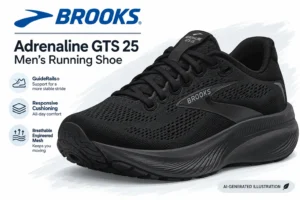
| Support | GuideRails™ technology is designed to keep excess movement in check; it is not a brace or medical treatment |
| Cushioning | Balanced, nitrogen-infused cushioning with added material in the heel and forefoot |
| Drop | 10 mm; comfortable for many heel strikers, but a noticeable geometry if you prefer low-drop shoes |
| Weight | Women’s: 9.5 oz / 269.3 g. Men’s: 10.6 oz / 300.5 g |
| Women’s widths | 2A, B, D, and 2E across the line; exact color and size availability varies |
| Men’s widths | B, D, 2E, and 4E across the line; exact color and size availability varies |
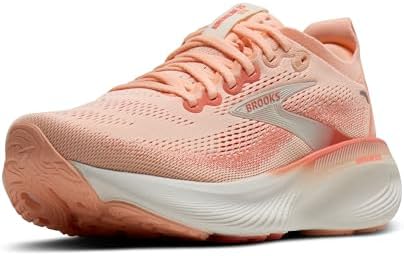
| Upper | Breathable mesh designed to balance structure, stretch, and a secure fit |
Brooks currently calls the cushioning balanced, not maximum-soft. That distinction matters. More cushioning may feel comfortable, but added softness can feel less planted to someone who wants a very firm platform. The 10 mm drop is another gray area: it may feel familiar to many heel strikers, while someone accustomed to low-drop footwear may find it changes the way the shoe loads the foot and lower leg.
The Brooks Adrenaline GTS 25 may not be the best choice if you:
The Brooks Adrenaline line has earned a reputation as a dependable stability option. Rather than relying on an old-fashioned medial post, the GTS 25 uses GuideRails™ to support the body’s natural motion path and keep excess movement in check.
That balance between support and comfort is what makes the GTS 25 worth comparing. I would not call it universally best, but it belongs on a serious comparison list if you want guidance without moving all the way to a heavy motion-control or extra-depth orthopedic shoe.
GuideRails are often described as a gentler alternative to rigid motion-control technology. Brooks’ current wording is more precise: the system is designed to keep excess movement in check. Some people with overpronation or a wandering knee may appreciate that guided feeling. Others may find it unnecessary or intrusive.
GuideRails do not correct a medical condition, guarantee alignment, or prevent falls. The honest test is how the shoe feels on your stride—especially while turning, stopping, and walking on the surfaces you use every day.
One of the first things I look for is a stable platform. The Adrenaline’s structured-support design appears more grounded than a narrow racing shoe, and that can matter more to me than chasing the softest cushioning available.
For someone living with neuropathy or reduced sensation, predictability underfoot may be valuable. But a supportive label is not enough. If the shoe rocks, pinches, slips at the heel, or makes you feel less steady, it is the wrong shoe for you no matter how many people recommend it.
I put real emphasis on a secure heel. Brooks currently lists a secure fit as one of the GTS 25’s core features. A well-held heel can reduce rubbing and help the shoe feel more connected to the foot.
Heel hold is still individual. Going wider to gain toe room can sometimes create too much room at the rear, while a thicker orthotic can lift the heel higher in the shoe. Check for slipping before assuming the width label solved the fit.
Brooks added more nitrogen-infused cushioning in the heel and forefoot and describes the result as soft and dynamic. During my own test, the cushioning felt comfortable without becoming overly soft, and the shoe did not feel overly stiff or unstable. That firsthand impression helps explain why I see the GTS 25 as a useful middle ground, although fit and ride will feel different from person to person.
Here is the tradeoff that needs to be said clearly: softness and stability are not the same thing. A shoe can have GuideRails and still feel too soft for someone who wants a firm, highly planted base. Conversely, a reader with sore joints may find a very firm shoe uncomfortable. This is one of those gray areas that can only be settled with a real fit trial.
The toe box felt comfortable during my try-on, but I would not call it universally roomy. The Adrenaline has useful width coverage, but a wider version is not automatically the same as an anatomical toe box or an extra-depth therapeutic shoe.
Brooks currently shows women’s widths from 2A through 2E and men’s widths from B through 4E across the line. Not every color, size, or stock configuration carries every width. If you have bunions, hammertoes, swelling, or very broad forefeet, check the exact combination and make sure the upper is not pressing on a tender area.
The engineered mesh upper is designed to balance breathability, structure, and stretch. That is a sensible combination for everyday wear: enough give to move with the foot, but more shape than a very loose knit upper.
The tradeoff is that a structured mesh can still rub or feel confining on a prominent bunion, high-volume foot, or swollen area. Breathability does not tell you whether the last matches your foot.
I would not call the Adrenaline automatically orthotic friendly. A more honest version is that it may work with some orthotics, provided the factory sockliner removes cleanly and the replacement does not crowd the toes or lift the heel.
A bulky custom device or AFO may need more depth than a conventional running shoe provides. Test the exact device inside the shoe. If the heel sits too high, the upper bulges, the brace rubs, or the closure barely reaches, a wider label alone will not fix the problem.
The steady-feeling design, secure fit, and width choices may suit some people with neuropathy or diabetes. The Adrenaline is not automatically appropriate for a high-risk foot and does not treat either condition. If you have an ulcer, circulation problem, major loss of sensation, skin breakdown, deformity, or prescribed footwear needs, ask a qualified clinician before relying on a standard running shoe.
If sensation is reduced, inspect the inside for seams or debris and check your skin after a short indoor trial. The NIDDK foot-care guidance explains why unnoticed rubbing or pressure deserves attention.
Balanced cushioning and a secure platform may feel comfortable to some readers with sore feet or joints. That is not the same as saying the shoe relieves arthritis or knee pain. The 10 mm drop, GuideRails, and cushioning geometry can change how the shoe feels farther up the leg, and not everyone responds the same way.
This is the clearest use case for the Adrenaline’s structured design. The Adrenaline is a structured-support shoe, and GuideRails are specifically intended to keep excess movement in check. Even here, support should not feel like pressure or force. If the rails feel intrusive, compare a neutral model or get gait-specific advice.
A secure, guided shoe may feel more predictable than a loose or very soft shoe. It cannot prevent falls, and the extra cushioning may feel less planted to some people. Test starts, stops, turns, and short side steps near a stable support before deciding.
For more of the questions I use when comparing footwear, see Rejuva Sole’s neuropathy footwear guide and guide to therapeutic shoes and foot conditions.
Affiliate reminder: The men’s and women’s product cards are included below. I may earn from qualifying Amazon purchases, but commission does not change this verdict.
I am not using a numeric score because this review does not have a documented scoring method for a precise rating. I did personally try the shoe, but a firsthand test alone is not enough to support a number. What matters here is whether the GTS 25’s current design and tradeoffs make sense for your feet.
It isn’t the softest shoe.
It isn’t the widest shoe.
It isn’t the most heavily cushioned shoe.
Instead, it offers a thoughtful combination of structured support, balanced cushioning, width choices, and everyday versatility. That is exactly why it remains worth comparing.
My honest conclusion is conditional: based on my firsthand experience and current research, the GTS 25 is a strong candidate for someone who wants guided support for walking or road running. It is a weaker choice for someone needing extra depth, a truly anatomical toe box, a very firm platform, a neutral ride, or accommodation for a bulky brace.
At Rejuva Sole, I don’t simply recommend popular shoes.
I evaluate every model using the same process built around my Stable Anchor Footwear philosophy and my lived experience with neuropathy, chronic pain, and mobility limitations. For this review, I combined my firsthand experience trying the GTS 25 with current product research. I distinguish what I personally noticed from what the manufacturer documents, and I do not add testing details that are not supported.
I believe supportive footwear should help you compare fit, reduce avoidable pressure and movement, and make informed decisions—not impulse purchases.
My goal is simple: educate first and recommend second. Because the right shoe isn’t the one with the most advertising. It’s the one that fits your actual feet and helps you move as comfortably and confidently as your circumstances allow.
Yes. I personally tried and tested the Brooks Adrenaline GTS 25. When I tried it, the cushioning felt comfortable without becoming overly soft, and the shoe did not feel overly stiff or unstable to me. I combined those firsthand observations with current Brooks specifications, clearer limitations, and honest tradeoffs. I do not add testing details that are not documented.
It is designed as a structured-support shoe, and Brooks says GuideRails™ technology helps keep excess movement in check. Some people with overpronation may appreciate that guidance; others may find it intrusive. It should feel supportive, not forceful.
It may suit some people who want a secure fit, balanced cushioning, and multiple widths. It does not treat neuropathy or diabetes and is not automatically appropriate for ulcers, poor circulation, major loss of sensation, deformity, or prescribed footwear needs. Those concerns deserve guidance from a qualified clinician.
Brooks currently shows women’s widths of 2A, B, D, and 2E and men’s widths of B, D, 2E, and 4E across the line. Availability varies by color, size, and stock, so confirm the exact configuration before buying.
Some orthotics may work if the factory sockliner removes cleanly and enough depth and heel hold remain. Bulky orthotics, braces, and AFOs may need more room than this conventional running shoe provides. Test your exact device rather than relying on the width label.
Brooks lists it for both road running and walking. Its best use depends on whether the GuideRails support, 10 mm drop, cushioning, and fit feel comfortable during your own indoor trial.
Rejuva Sole provides educational footwear information, not medical advice, diagnosis, treatment, or fall-prevention guarantees. Stop using a shoe that causes pain, numbness, skin irritation, new pressure, or instability, and ask a qualified healthcare professional about symptoms, circulation problems, ulcers, fall risk, braces, orthotics, or prescribed footwear.