REJUVA SOLE™
Rise Above the Ache™
Rise Above the Ache™
Affiliate disclosure: Rejuva Sole may earn a commission if you buy through a qualifying link on this page, at no additional cost to you. Affiliate relationships never decide whether I recommend a shoe.
How this review was created: This is a research-based review. I have not personally worn the KURU DASH Vanta. I checked KURU’s current specifications, construction details, available widths, intended uses, and return information, then evaluated the shoe using Rejuva Sole’s Stable Anchor Footwear principles. Specifications and availability were last checked September 12, 2026.
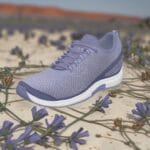
The KURU DASH Vanta is a lightweight athletic sneaker built around a breathable mesh upper, a structured easy-on heel, a 9 mm heel-to-toe drop, and KURU’s heel-hugging support system. At a listed 8.5 ounces, it is dramatically lighter than many support-first walking shoes.
That lighter build is the reason the DASH Vanta deserves attention—and the reason it needs an honest limit. It may suit men who want less weight, more flexibility, and everyday heel support. It is not the obvious choice for severe swelling, very wide feet, bulky braces, or someone who needs maximum motion control.
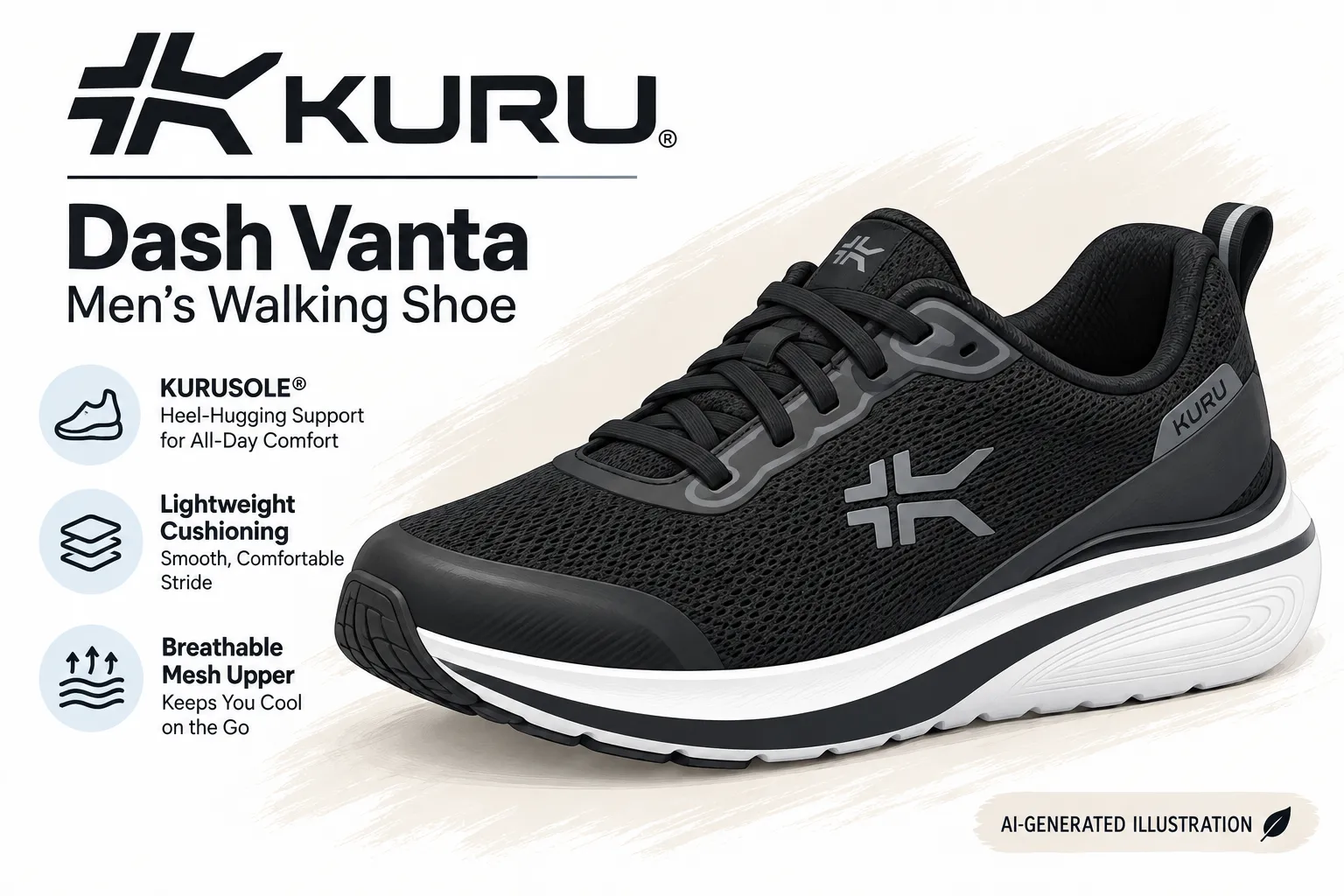
Best for: Men with neuropathy or sensitive feet who fit Medium or Wide sizing and want a breathable, lightweight sneaker with a structured heel for everyday walking, light workouts, or strength training.
Skip it if: You need Extra Wide or XX-Wide sizing, substantial extra depth, proven AFO compatibility, rigid motion control, or a shoe specifically designed for open wounds or serious diabetic foot complications.
| Current specification | What it may mean in real life |
|---|---|
| Best uses listed by KURU | Light workouts, strength training, and running; Rejuva Sole sees it primarily as a light athletic and everyday shoe. |
| Weight | 8.5 oz. listed by KURU, making it notably light for a support-oriented sneaker. |
| Heel-to-toe drop | 9 mm, so the heel sits moderately higher than the forefoot. |
| Widths | Medium and Wide. No Extra Wide or XX-Wide option was listed when checked. |
| Upper | Breathable mesh intended to release heat. |
| Heel | Structured easy-on heel designed to hold its shape and support entry. |
| Sole | Lightweight EVA cushioning with KURU’s KURUCLOUD support system. |
| Foot support | KURUSOLE heel cradle and contoured ULTIMATE INSOLE. |
| Price when checked | $119 on KURU’s US website; price and promotions can change. |
| Return information | KURU advertised a 91-day Feel Better Promise; confirm current eligibility and shoe-condition rules before wearing outdoors. |
Neuropathy footwear decisions are about more than softness. Reduced sensation can make it harder to notice rubbing, heat, pressure, or an unstable fit before the skin becomes irritated. A useful shoe needs enough room for the toes, a heel that stays controlled, a smooth interior, reliable traction, and cushioning that does not make the wearer feel disconnected from the floor.
The DASH Vanta brings several promising pieces: breathable mesh, a structured rearfoot, a generous-looking toe shape, conventional laces, and unusually low weight. KURU also uses a contoured heel system rather than a flat insert. For the right foot, that may improve heel hold and reduce sliding.
The caution is that KURU does not publish detailed base-width measurements, interior-depth measurements, or independent neuropathy testing for this model. A supportive marketing description is not proof that the shoe will protect a specific foot. Fit must be judged on the person wearing it.
KURU describes its footwear as having generous toe boxes, and one DASH Vanta customer quoted on the product page reported plenty of toe space. That is encouraging, but it does not replace measurements or a careful try-on. The current DASH Vanta listing offers Medium and Wide—not Extra Wide or XX-Wide.
A flexible mesh upper can adapt to mild changes in foot volume, but stretch is not the same as safe depth. Men with significant edema, a very high instep, prominent bunions, hammertoes, thick orthotics, or protective dressings may need a true extra-depth shoe with more width choices.
The toes should lie flat without touching the front or rubbing the upper. The heel should stay seated without forcing you to overtighten the laces. Do not size up so far that the foot slides inside the shoe; internal movement can create friction that a numb foot may not immediately feel.
The easy-on structured heel is one of the DASH Vanta’s strongest practical features. KURU says the rear structure helps the shoe keep its shape instead of collapsing during entry. That may help people who have difficulty bending or guiding the heel into a soft shoe.
KURUSOLE is designed to cradle the heel and add rearfoot support. A secure heel can feel steadier than a loose, collapsing upper. Still, the DASH Vanta is a lightweight, flexible athletic shoe—not a heavy motion-control walker. KURU does not provide the same type of stability guidance that brands use for dedicated motion-control models.
If balance is a major concern, test whether the base feels broad enough for you and whether the heel contour centers the foot without pushing it sideways. Stop if the shoe creates leaning, edge pressure, wobbling, or an unfamiliar rolling sensation.
The lightweight EVA sole is intended to soften impact while keeping the shoe flexible. That can be useful for someone who finds heavy walking shoes tiring. It may be less satisfying for a wearer who needs a firm, highly controlled platform or who compresses soft foam quickly.
A 9 mm drop is a familiar moderate-to-high offset rather than a flat, zero-drop setup. Some wearers prefer that heel elevation; others may feel more stable closer to the ground. KURU does not publish independent shock-absorption, energy-return, or torsional-stiffness measurements for the DASH Vanta, so I would not describe the ride as proven plush, firm, or motion controlling.
For neuropathy, the correct amount of cushioning is the amount that reduces harsh pressure without hiding the floor so completely that walking feels vague or unstable.
The mesh upper should release more heat than leather or waterproof construction. That may help feet that become hot or sweaty, and moisture control matters when skin is fragile. Breathability does not guarantee a seamless interior, however.
Before wearing, run your hand around the inside to check for rough seams, folded lining, hard overlays, or debris. Wear appropriate socks unless your clinician advises otherwise, and inspect both feet after every short trial. Redness, blistering, warmth, swelling, or a new mark deserves attention even when it does not hurt.
KURU uses a contoured ULTIMATE INSOLE and a rounded heel-cup design. KURU’s general orthotics guidance says its insoles can be removed, but the rounded KURUSOLE shape tends to work best with an orthotic that has a compatible rounded underside.
A thick or square-backed orthotic may sit unevenly, lift the heel, or take away toe volume. Test the exact orthotic inside the exact shoe. The current product information does not establish AFO compatibility. A brace may require more opening, depth, fastening length, and width than this lightweight sneaker provides.
KURU may recommend an adjustment period for its contoured support. Adjustment should never mean ignoring skin irritation, new numbness, pain, or unsafe balance.
This is the most useful comparison within KURU’s men’s lineup. Both shoes combine a breathable mesh upper, a generous toe-box shape, Medium and Wide options, and KURU’s heel-hugging support system. The important difference is what each shoe emphasizes: the DASH Vanta favors low weight and flexibility, while the QUANTUM 2 favors walking stability and a more substantial platform.
| Feature | DASH Vanta | QUANTUM 2 |
|---|---|---|
| Weight | 8.5 oz. | 13.05 oz. |
| Heel-to-toe drop | 9 mm | 8.5 mm |
| Widths | Medium and Wide | Medium and Wide |
| Underfoot design | Lightweight EVA sole with a more flexible athletic feel | KURUCLOUD midsole, upgraded KURUSOLE support, and a wider, more stable base |
| Best use | Light workouts, strength training, running, and active everyday wear | Walking, prolonged standing, training, and all-day wear |
| Main advantage | Much lighter and less expensive | More substantial platform and stability emphasis |
| Main tradeoff | Less substantial for readers who need stronger walking stability | About 4.5 oz. heavier per shoe and more expensive |
I would generally choose the QUANTUM 2 for a man whose neuropathy also affects balance or who wants a shoe primarily for walking and prolonged standing. Its wider, more substantial base gives it the clearer stability advantage on paper. That does not make it automatically safe for every gait, and its extra weight may be tiring for someone with leg weakness, foot drop, or difficulty lifting the feet.
I would choose the DASH Vanta when keeping the shoe light is the higher priority and the wearer does not need Extra Wide sizing, extra depth, or maximum stability. At 8.5 ounces, it may feel less cumbersome during light exercise or shorter active periods, but its lighter and more flexible construction is a tradeoff—not proof that it will be safer.
My honest verdict: The KURU QUANTUM 2 remains the stronger all-around KURU candidate for many neuropathy readers. The DASH Vanta earns its place as the lighter, lower-cost alternative for carefully selected feet and more active use.
The KURU DASH Vanta is an interesting middle ground: lighter and more flexible than many support-first shoes, but more structured at the heel than a flimsy mesh sneaker. For a man with neuropathy who fits Medium or Wide and wants a breathable everyday athletic shoe, that balance may be appealing.
Its limits are important. It is not Extra Wide, not extra depth, not proven brace compatible, and not a maximum-stability model. The heel-hugging contour is a feature only when it matches the wearer without creating pressure.
Bottom line: A promising lightweight KURU for carefully selected feet—not a universal neuropathy shoe and not a substitute for prescribed protective footwear.
See the full men’s neuropathy and neurological footwear guide to compare the DASH Vanta with more stable, wider, and extra-depth choices.
No. This is a research-based review using current KURU product information and Rejuva Sole’s Stable Anchor Footwear principles.
Yes. KURU listed Medium and Wide widths when checked. Extra Wide and XX-Wide were not listed.
It may suit some men who need a lightweight, breathable shoe with toe room and a structured heel. It may not provide enough width, depth, or motion control for more complex feet. Neuropathy requires careful fit and skin inspection because pressure or rubbing may not be felt normally.
KURU generally allows its insole to be removed, but the brand’s rounded heel cup works best with a compatible rounded orthotic. A thick or square-backed device can change heel hold and toe room.
No AFO compatibility claim was listed. A removable insole and laces help, but brace fit also depends on depth, opening, fastening length, and the exact AFO.
The structured heel may feel supportive, but KURU does not publish base-width or motion-control measurements for this model. Anyone with a shuffle gait, reduced toe clearance, weakness, dizziness, or a fall history should test the shoe with professional guidance when possible.
Rejuva Sole provides educational footwear information, not medical advice, diagnosis, treatment, or a guarantee of pain relief or fall prevention. Shoes cannot treat or cure neuropathy. Ask a qualified clinician, podiatrist, physical therapist, or orthotist about loss of protective sensation, circulation problems, wounds, sudden swelling, falls, braces, orthotics, or prescribed footwear.