REJUVA SOLE™
Rise Above the Ache™
Rise Above the Ache™
Affiliate disclosure: Rejuva Sole may earn a commission if you buy through a qualifying link on this page, at no additional cost to you. Affiliate relationships never decide whether I recommend a shoe.
How this review was created: This is a research-based review. I did not personally test the KURU QUANTUM 2. I compared current KURU specifications with independent lab testing and evaluated the shoe through Rejuva Sole’s Stable Anchor Footwear principles. Specifications, price, and availability were last checked August 31, 2026.
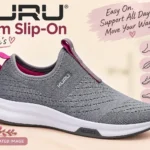
The KURU QUANTUM 2 is a support-first walking shoe with a wider base, rounded toe room, a rigid heel counter, and KURU’s contoured KURUSOLE heel cradle. KURU positions it for walking, all-day standing, training, and gym use.
Independent testing supports the strongest parts of that story: a roomy toe area, broad platform, secure rearfoot, good wet-surface traction, breathable mesh, and removable insole. It also supplies the needed reality check. The shoe is heavy, its measured shock absorption was only moderate, its energy return was ordinary, and its upper durability did not stand out for the price.
KURU uses strong pain-relief language on its own page. Rejuva Sole treats that as a manufacturer claim, not a promise. A deeply contoured support system can feel protective when it matches the foot and intrusive when it does not.

Price subject to change
| Current specification | What it means in real life |
|---|---|
| Use | Walking, all-day standing, training, and gym use according to KURU. |
| Price when checked | $169; price can change. |
| Heel system | Upgraded KURUSOLE TPU heel cradle with increased sidewall height. |
| Cushioning | KURUCLOUD midsole with a contoured ULTIMATE INSOLE. |
| Drop | KURU lists 8.5 mm; RunRepeat measured 9.5 mm on its sample. |
| Stack height | RunRepeat measured 33.6 mm at the heel and 24.1 mm at the forefoot. |
| Weight | KURU lists women’s 10.8 oz and men’s 13.05 oz; RunRepeat measured 13.7 oz / 387 g in a men’s US size 9. |
| Widths | Medium and Wide in the current men’s and women’s listings; no X-Wide option was shown. |
| Upper | Open-weave mesh with synthetic overlays. |
| Insole | Removable; KURU says rounded-heel orthotics fit its deep rounded heel cup best. |
Independent testing measured above-average interior toe width, a broad forefoot and heel platform, strong heel-counter stiffness, good wet-concrete traction, and high breathability. The same lab measured only moderate shock absorption and ordinary energy return.
The official 8.5 mm drop and independent 9.5 mm result are close. The QUANTUM 2 also has a moderate early toe rocker and heel bevel, so the transition feels guided rather than completely flat.
The KURU QUANTUM 2 may be a weaker choice if you:
The QUANTUM 2 is not simply a soft walking shoe. Its identity comes from the combination of a shaped heel cradle, stiff padded heel counter, broad base, contoured insole, and moderately soft foam.
For the right wearer, that structure can feel more connected and predictable than an ultra-soft neutral trainer. For the wrong wearer, the same shape can create arch pressure, heel irritation, or a sense that the shoe is steering the foot.
KURU says the updated KURUSOLE uses taller TPU sidewalls to improve heel support. Independent testing found a very stiff heel counter, substantial rearfoot structure, and a wider-than-average heel platform.
Those findings support describing the QUANTUM 2 as stability-oriented. They do not prove that it corrects every gait pattern. The heel should feel centered without hard pressure, rubbing, or a forced arch.
A rigid heel can improve lockdown, but it may irritate a sensitive Achilles insertion, heel prominence, or skin that does not tolerate pressure.
KURU markets KURUCLOUD as superior shock absorption. RunRepeat’s lab measured soft foam but only moderate heel shock absorption and ordinary energy return compared with other walking shoes.
That does not mean the shoe is harsh. It means the comfort comes as much from the contoured insole, padding, and controlled platform as from deep impact absorption.
People expecting a marshmallow-soft or springy ride may be disappointed. People who prefer cushioning that does not wobble may consider that restraint a benefit.
Independent molding supports KURU’s claim that the QUANTUM 2 has a rounded, roomy toe area. The tested medium was slightly wider than average at the ball of the foot and notably roomy near and above the toes.
Roomy is not the same as unlimited. Current listings show Medium and Wide, not X-Wide. Significant edema, a very high instep, severe bunions, or a thick brace may still need more width or depth.
Choose the size that secures the heel while allowing the toes to lie flat. Do not size so large that the foot slides or the heel lifts.
The listed 8.5 mm drop places the heel above the forefoot. The lab measured 9.5 mm and described a moderate early toe rocker with a heel bevel.
That geometry can ease the feeling of rolling through a walking step, but a rocker remains a balance tradeoff. I cannot safely walk in rockered shoes. Anyone with reduced toe clearance, a shuffle gait, dizziness, or a fall history should test the shape carefully.
The rocker is not as aggressive as some modern walking shoes, yet it is present. A wide base does not automatically make curved geometry safe for every person.
The stock insole is removable, and KURU says custom orthotics can be used. KURU also explains that its deep KURUSOLE heel cup is rounded, so orthotics with a rounded underside fit best.
A square-backed or very thick orthotic may sit unevenly, lift the heel, or remove too much toe volume. Test for rocking, heel slip, arch pressure, and toe crowding.
AFO compatibility was not established. Medium/Wide sizing and a removable insole help, but brace fit also depends on depth, opening, fastening length, heel geometry, and the exact device.
At a listed 13.05 oz for men and 13.7 oz in the tested sample, the QUANTUM 2 is heavy. That weight buys substantial structure but can fatigue weak hip flexors, make foot clearance harder, or feel clumsy at a faster pace.
The open-weave mesh performed well in independent breathability testing. Wet-concrete traction was also strong, and the broad rubber-covered base should feel dependable on ordinary pavement.
The shoe is not presented as a certified slip-resistant occupational model. Independent abrasion testing found only average toe-box durability and poor heel-padding durability, which is worth considering at a $169 price.
KURU generally recommends easing into its contoured support rather than wearing a new pair all day immediately. Short indoor sessions help reveal whether the arch and heel shape agree with your foot.
Normal adjustment is not the same as injury. Stop for pinching, burning, numbness, skin irritation, new pain, or instability.
KURU advertised a 91-day promise when checked, but eligibility and condition rules can change. Read the current policy before wearing the shoes outdoors.
The QUANTUM 2 combines a cushioned midsole with a structured heel cup and contoured insole. That may feel supportive for some people with heel pain, particularly when a loose neutral shoe feels unstable.
It is not a treatment and the contour may be wrong for some arches. The independent lab’s moderate shock-absorption result is also a reason not to equate KURU’s marketing language with a guaranteed outcome.
AAOS includes supportive shoes, cushioning, and orthoses among conservative options, while the 2023 clinical guideline warns against treating an orthosis as an isolated short-term solution.
The broad platform and strong rearfoot structure may help some heavier wearers stay centered through long periods on hard floors. The foam is soft without feeling extremely squishy in independent testing.
The tradeoffs are weight, price, and individual contour. Check for lean, edge loading, arch pressure, and fatigue during short trials before committing to a full shift.
The rounded toe box, vertical toe room, breathable upper, and thick interior padding are promising features. A stiff heel counter and synthetic overlays can still create pressure points.
Reduced sensation requires more caution, not less. Inspect the skin and inside of the shoe after each trial, and follow a clinician’s footwear plan for diabetes, ulcers, circulation problems, or loss of protective sensation.
The wide base, secure laces, padded heel, and strong rearfoot may feel steady for some people.
The shoe’s weight, moderate rocker, elevated heel, and deep contour may work against someone who struggles to lift the foot or needs a flat reference to the floor. Toe clearance matters as much as heel support.
Do not assume that a removable insole makes the QUANTUM 2 brace-ready. Fit the actual AFO with an orthotist or therapist when possible.
The KURU QUANTUM 2 is a credible support-first walking shoe for someone who wants a roomy toe area, firm heel hold, and broad base. Independent testing backs its stability, toe room, breathability, and traction.
The honest limitations are just as important. It is heavy, only Medium/Wide, moderately rockered, and less shock-absorbing than KURU’s strongest wording suggests. Its contour must match the person wearing it.
Choose it because you want structured walking support and can test the fit—not because a manufacturer promises pain relief. Skip it if you need X-Wide or extra-depth space, dislike pronounced contour, cannot safely manage a rocker, or tire easily in heavy shoes.
Bottom line: stable and roomy with real support value, but not light, flat, or universally comfortable.
Rejuva Sole does not rank shoes by commission rate, repeat a manufacturer’s pain-relief promise, or call a product tested when it was not.
I evaluate every model using the same Stable Anchor Footwear principles: a steady base, secure heel support, enough room for the toes, controlled cushioning, realistic orthotic compatibility, and comfort that does not ignore balance or mobility.
My goal is simple: educate first and recommend second. The right shoe is the one that fits your actual feet and helps you move as comfortably and confidently as your circumstances allow.
No. This is a research-based review using current KURU specifications and independent RunRepeat lab findings.
It may feel supportive for some people because of its structured heel, contoured insole, roomy toe area, and broad base. It does not treat plantar fasciitis, and the contour, rocker, weight, and fit must suit the wearer.
No X-Wide option was shown in the current men’s or women’s listings. KURU offered Medium and Wide when checked.
Independent molding found above-average width and height around the toes in the tested medium sample. Very wide, swollen, braced, or extra-depth feet may still need more space.
Yes, the stock insole is removable. KURU says orthotics with a rounded heel work best with its deep rounded heel cup. Test the exact device for level seating, heel hold, and toe room.
Independent wet-concrete traction was strong, but the QUANTUM 2 is not presented as a certified slip-resistant occupational shoe.
Ease into the contoured support with short indoor sessions. Pinching, burning, numbness, skin irritation, new pain, or instability are not acceptable break-in symptoms.
Rejuva Sole provides educational footwear information, not medical advice, diagnosis, treatment, or a guarantee of pain relief or fall prevention. Footwear may support comfort, but the 2023 heel-pain clinical practice guideline does not treat an orthosis as a stand-alone short-term solution. Stop using a shoe that causes pain, numbness, skin irritation, new pressure, or instability, and ask a qualified healthcare professional about persistent heel pain, circulation problems, ulcers, fall risk, braces, orthotics, or prescribed footwear.