REJUVA SOLE™
Rise Above the Ache™
Rise Above the Ache™

From Tammy: I wrote this guide from my perspective as the founder of Rejuva Sole™ and as someone living with neuropathy, arthritis, chronic pain, balance limitations, and mobility challenges. I spent hours reviewing current clinical guidance, footwear features, manufacturer information, and recurring user concerns. Unless I clearly say otherwise, I have not personally worn every shoe or product mentioned.
Important: I am not a medical professional. This article is educational and does not diagnose, treat, or cure any condition. Discuss significant pain, numbness, swelling, wounds, falls, or changes in walking with a qualified healthcare professional.
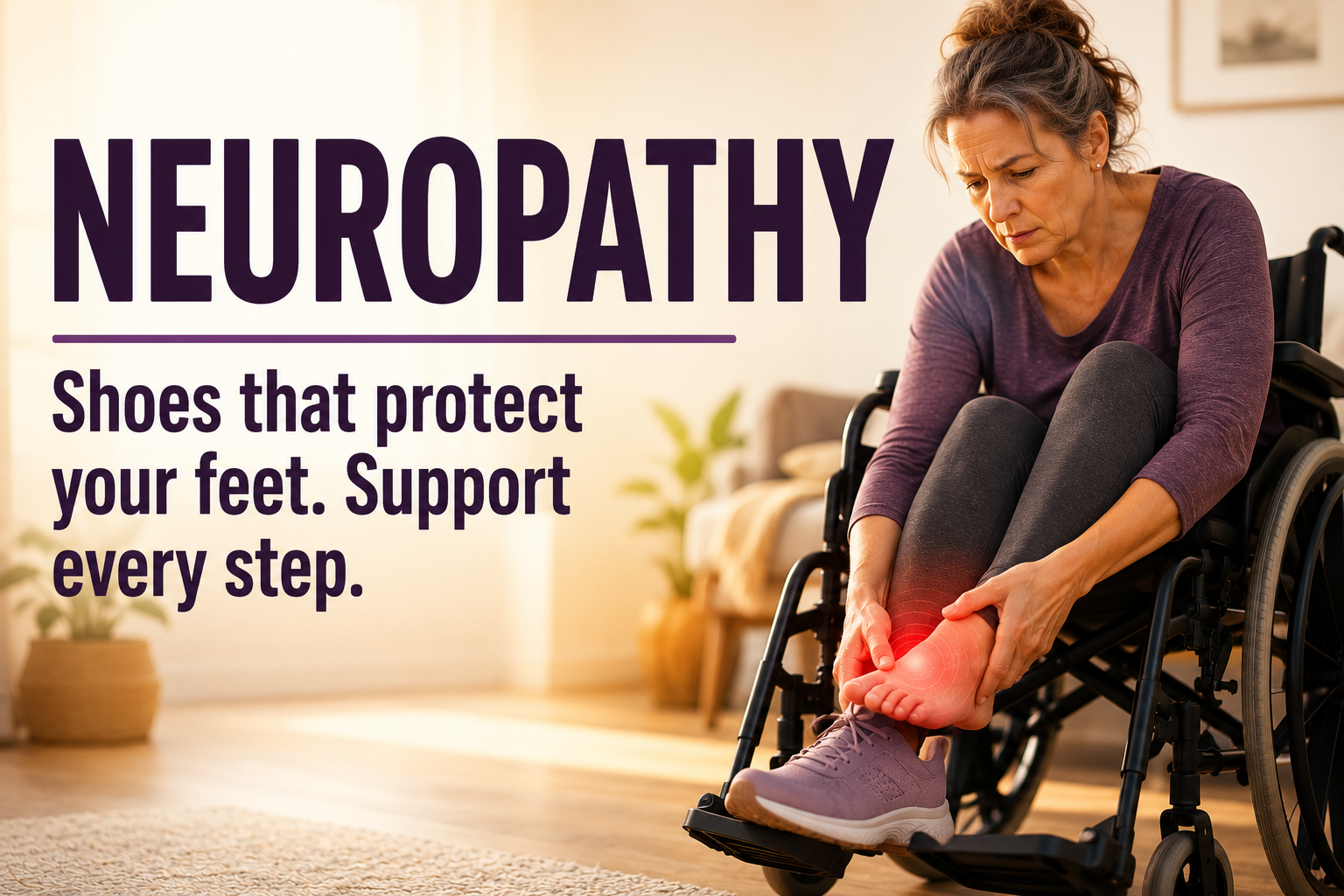
Living with neuropathy or another neurological condition can change the way you walk, stand, and move through daily life. Burning feet, numbness, tingling, muscle weakness, foot drop, poor balance, and reduced sensation can make every step feel uncertain.
While the right shoes won’t cure nerve damage, they can make a meaningful difference by improving stability, reducing pressure, protecting sensitive feet, and helping you walk with greater confidence.
At Rejuva Sole, I research supportive footwear, translate the evidence into plain English, and help you choose shoes that best fit your condition, lifestyle, and budget. My goal isn’t to sell you the most expensive shoe—it’s to help you find the right one.
Neuropathy is damage or dysfunction of the nerves. It can affect sensation, movement, and balance. Some people experience burning pain, while others lose feeling in their feet completely. Because symptoms vary from person to person, there is no single “best” shoe for everyone.
Neuropathy may be caused by:
Regardless of the cause, protecting your feet and reducing your fall risk should always be priorities.
Many neurological disorders change the way people walk or maintain their balance.
These include:
Although each condition is different, many people benefit from the same footwear principles: stability, support, roominess, and protection.
Neurological conditions may cause:
Some people experience only one or two symptoms, while others experience several.
When your nerves aren’t sending or receiving signals properly, your feet can’t always tell your brain where they are.
That makes balance much more difficult.
Supportive footwear helps provide a more stable foundation for every step. While shoes cannot repair damaged nerves, they can reduce unnecessary movement, protect sensitive areas, and help you walk more confidently.
Every shoe on Rejuva Sole is evaluated using the same principles.
A wider, stable platform helps improve balance and reduces side-to-side movement.
A firm heel counter helps keep the foot properly aligned and minimizes unnecessary motion.
Many people with neuropathy experience swelling, bunions, hammertoes, or simply need more room. A spacious toe box helps reduce pressure on sensitive toes.
Extra-depth shoes provide space for custom orthotics, diabetic insoles, and swollen feet.
Many people eventually require custom orthotics. A removable insole makes that possible.
Soft doesn’t always mean better.
Shoes that are overly soft can sometimes reduce stability. I generally recommend cushioning that protects your feet while still providing a secure walking platform.
One of the biggest lessons I’ve learned is that the most comfortable shoe isn’t always the safest shoe.
A shoe can feel wonderful for five minutes but still allow excessive movement, poor alignment, or instability.
That’s why I evaluate shoes based on much more than comfort alone.
My goal is to help you find footwear that offers:
Neuropathy affects each person differently.
Some people need:
Others may benefit from a firmer, more supportive walking shoe.
That’s why Rejuva Sole doesn’t recommend dozens of shoes.
Instead, I carefully select a small number of footwear options that excel in different categories, making it easier to choose the one that best fits your needs.
I understand how frustrating it is to search for shoes that actually help.
I live with severe neuropathy and multiple mobility challenges. I’ve experienced falls, balance problems, chronic pain, and the disappointment of buying shoes that simply didn’t work.
That’s one of the reasons I created Rejuva Sole.
I wanted a place where people could find honest, easy-to-understand guidance instead of overwhelming lists of products.
Every recommendation on Rejuva Sole is based on careful research and thoughtful evaluation.
Whenever possible, I also include real-world testing from people living with the conditions these shoes are designed to help.
If a shoe isn’t right for everyone, I’ll tell you.
If a shoe has limitations, I’ll tell you that too.
Helping you make an informed decision will always be more important than making a sale.
Living with neuropathy or another neurological condition can make walking more challenging, but the right footwear can help improve comfort, confidence, and stability.
While no shoe can cure nerve damage, choosing supportive footwear may reduce pressure on sensitive feet, improve balance, and help lower your risk of falls.
My hope is that Rejuva Sole becomes more than just another shoe website.
I hope it becomes a trusted resource where you can learn, compare, and confidently choose the footwear that best supports your journey.
Because every step matters.
And together, we can continue to rise above the ache.