
Cadense AERIO Sandal Review: Men, Women & All Six Conditions
Cadense AERIO for men and women: an honest look at fit, foot drag, and suitability across Rejuva Sole’s six condition pathways.
Rejuva Sole™ | Research-Based Footwear Review
A sandal should make daily life easier: getting dressed, keeping cool, and moving from room to room. For someone whose toes catch the floor, the sole matters just as much as the upper. The Cadense AERIO brings an unusual walking mechanism into a sandal for men and women. Here we look at that one model through all six Rejuva Sole condition pathways, so you can see where it fits your needs.
Affiliate disclosure: Rejuva Sole may earn a commission from qualifying purchases at no additional cost to you. This review is based on manufacturer information and the health resources linked below. We have not personally wear-tested AERIO. Our fit judgments are interpretations of its design, not clinical proof of benefit.
What makes AERIO different?
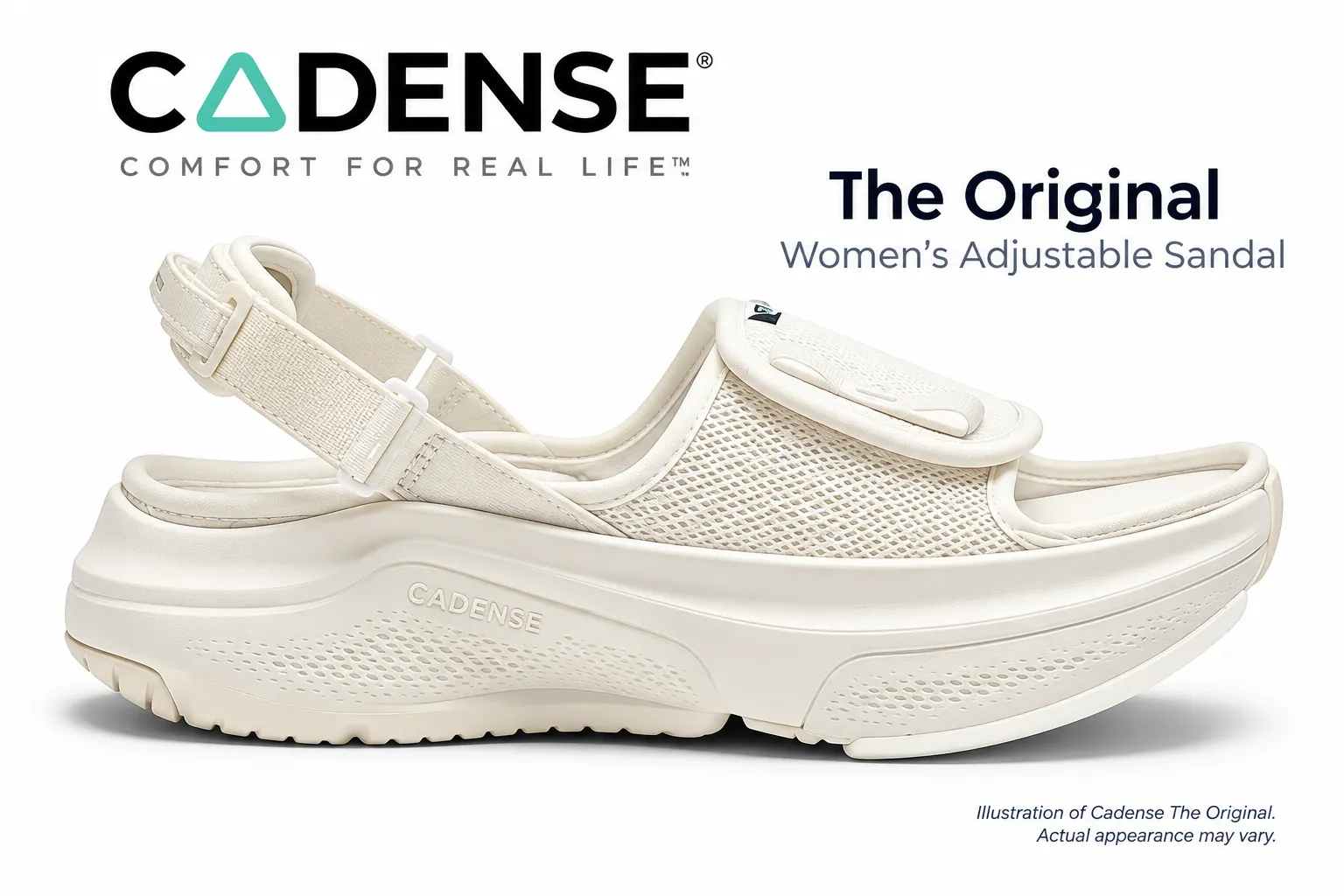
Cadense describes AERIO as a sandal-slide hybrid with a mesh upper, an adjustable front closure, and a removable heel strap. Its Variable Friction Technology is designed to let a lightly dragging foot glide, then provide grip as weight is applied. The purpose is easier foot advancement; cushioning alone is a different footwear need.
The shared Cadense mechanism uses low-friction nylon elements and a rocker transition toward a gripping forefoot. Read the manufacturer’s explanation of glide and grip. An engineering idea does not establish that a sandal will prevent falls, correct a diagnosis, or relieve pain for a particular person.
Men’s and women’s fit
The men’s AERIO listing offers whole sizes 8–15; the women’s listing offers whole sizes 5–12. Cadense describes one adjustable width and recommends sizing down if between sizes. Use the model’s chart and ask Cadense about your measurements before ordering, especially if you normally need extra width.
Rejuva Sole would check that the whole foot sits on the footbed, toes have space, the closure does not press on sore areas, and the heel stays in place. A loosened strap adds upper room; it cannot make the footbed wider. Keep the heel strap attached when evaluating walking security. Removing it changes how the sandal stays on your foot.
One model, all six condition pathways
A diagnosis can explain why walking is difficult, but it does not tell us which shoe fits. The following assessments apply to both men and women. Each weighs the same questions: foot clearance, fit, skin protection, and the way you actually walk.
1. Neuropathy & Neurological Conditions
Our assessment: a conditional option when reduced foot clearance is part of the problem. Neuropathy may involve weakness as well as numbness. If toe drag is present, AERIO’s mechanism is relevant to discuss with a rehabilitation professional. Having neuropathy, multiple sclerosis, or a nerve-related walking problem does not by itself make this sandal suitable.
Reduced sensation adds another concern: an open sandal leaves more skin exposed, and strap pressure can be missed. Check contact areas and foot retention during fitting. Readers who need protective or prescribed footwear should ask their foot-care clinician whether an open design is appropriate. See Mayo Clinic’s neuropathy overview and CDC guidance on diabetes and foot protection.
2. Arthritis, Bunions & Foot Pain
Our assessment: the adjustable upper may be useful, provided pressure and movement are comfortable. A front closure can offer an alternative to tying laces when hands are stiff. For bunions or rheumatoid arthritis, the important question is where the upper touches the foot. An open shape does not guarantee room for a prominent joint, and a strap crossing a tender area may still irritate it.
Try the sandal seated and then during a short walk. Look for rubbing, toe overhang, and a need to grip with your toes to keep it on. We would not assume the sole reduces inflammation or joint pain. Read Mayo Clinic on bunions and Mayo Clinic on rheumatoid arthritis for condition information alongside your own fitting advice.
3. Swelling, Bariatric Needs & Wide Feet
Our assessment: adjustable upper volume is promising; extra-wide fit and load capacity remain unconfirmed. An opening that can be adjusted may accommodate some changes in foot volume. It is still one footbed width. For a wider foot, check the edges while standing and make sure the closure can fasten securely without squeezing.
For bariatric needs, we would want an individual assessment of stability, cushioning, and durability. We have not verified a manufacturer maximum wearer weight or evidence establishing AERIO as bariatric footwear. It should not receive that recommendation from adjustability alone. Persistent or new swelling also needs its cause assessed; a shoe does not treat fluid retention. Learn more from Mayo Clinic’s edema guide.
4. Stroke Recovery, Drop Foot & Balance
Our assessment: this is the clearest design connection, with a supervised trial. Foot drop makes lifting the front of the foot difficult. AERIO’s intended glide addresses light ground contact during foot advancement, which may be relevant to some people after stroke. Shuffling or balance difficulties, including those associated with Parkinson’s, still require an individual gait assessment.
Keep prescribed braces and walking aids in the plan. This sandal is not automatically compatible with an AFO and does not replace gait training. A therapist can evaluate heel retention, turning, stopping, and the transition between floor surfaces. For readers with falls or uncertain weight shifts, we would not choose an unsupported first trial. See Mayo Clinic’s foot-drop explanation.
5. Plantar Fasciitis & Heel Pain
Our assessment: not enough verified support detail to choose it for heel pain alone. Plantar fasciitis makes the support under the foot important. Mayo Clinic advises footwear with arch support, substantial soles, and cushioning. AERIO’s headline feature concerns foot drag; that feature does not establish suitable arch support or heel-pressure relief.
If you also have toe drag, discuss both needs during fitting rather than assuming one feature solves both. Check how the heel feels at the start of a walk and afterward. If you rely on an orthotic, verify whether it can be used securely; we have not established that accommodation for this sandal. Read Mayo Clinic’s plantar-fasciitis treatment and footwear guidance.
6. Chronic Pain & Mobility
Our assessment: convenience may matter, but pain relief is unproven. Back, hip, knee, and foot pain can make getting dressed or walking more demanding. A fastening system without laces may be convenient. Whether AERIO improves comfort depends on fit and how your body responds to its sole, rather than on the location of pain alone.
For fibromyalgia or sensitivity to contact, check the upper and strap edges carefully. We have not established model-specific evidence that AERIO reduces widespread pain or changes pain processing. A relevant toe-drag problem could justify discussing it, while the pain itself still needs its own management plan. Read Mayo Clinic’s fibromyalgia overview.
Our Rejuva Sole verdict
AERIO deserves consideration as an adjustable sandal for someone seeking a different approach to foot drag. The open design, single width, and removable heel strap make careful fitting especially important. It earns a conditional place across our pathways when its walking function matches the wearer; it is not a treatment for all six conditions.
Cadense advises extra caution on wet or slippery surfaces. We would assess a new pair on a dry, clear surface with appropriate support, then follow the clinician’s and manufacturer’s advice about further use. Check current return terms, your chosen size, and availability before paying. A merchant’s testimonials do not substitute for evidence about your own condition.
Shop AERIO: men’s and women’s
The two Content Egg cards below represent one men’s and one women’s option. A displayed feed price relates to the pictured size and color; choose your size and check the current price, availability, and return policy at Cadense.


Continue exploring
For the closed sneaker design, read our Cadense Original review. You can also browse the Cadense collection at Rejuva Sole.
About the health links: Mayo Clinic and CDC links explain conditions and general care. They do not endorse Cadense or this review. Rejuva Sole provides footwear education; individual medical and fitting advice should come from your healthcare team.
Rise Above the Ache™