REJUVA SOLE™
Rise Above the Ache™
Rise Above the Ache™
Affiliate disclosure: As an Amazon Associate, I earn from qualifying purchases. If you buy through a link on this page, I may earn a commission at no additional cost to you. Affiliate relationships do not change my conclusions.
How this review was created: I have not personally worn or tested the HOKA Bondi 9. This is my independent, research-based review after comparing HOKA’s published specifications, design details, width options, intended uses, and the practical needs of readers who live with chronic pain or mobility challenges.
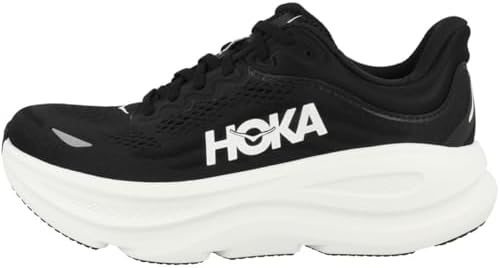
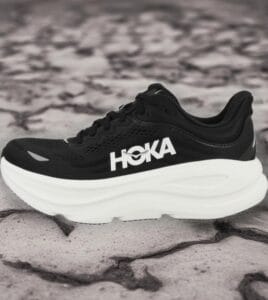
If you want a very cushioned shoe for everyday walking, the HOKA Bondi 9 deserves consideration. Its soft midsole, broad platform, 5 mm heel-to-toe drop, and smooth rocker geometry are designed to make forward movement feel easier. My main caution is that a tall, soft shoe is not automatically the safest choice for every person with balance or ankle-stability concerns.
The Bondi 9 looks strongest for walkers who prioritize maximum cushioning and a smooth transition through each step. It is a neutral shoe, not a medical device or a true motion-control shoe. If you need firm guidance, strong pronation control, or accommodation for a brace, another model may be a better match.
Compared with the Bondi 8, HOKA says the Bondi 9 adds 2 mm of stack height, introduces a super-critically foamed EVA midsole, retools the collar, and uses a more accommodating upper. Those changes may improve plushness and fit for some walkers, but the extra height is still a tradeoff if you feel safer closer to the ground.
I live with neuropathy, chronic pain, and mobility limitations, so I look beyond whether a shoe simply feels soft. I pay close attention to the base, heel security, transition, width choices, and whether the design could create a new stability problem while trying to solve a comfort problem.
The Bondi 9’s broad platform is a meaningful advantage over a narrow, highly stacked shoe. HOKA also places the foot within its rearfoot-focused Active Foot Frame rather than simply balancing it on top of the foam. Those design choices may help the shoe feel more planted during ordinary, straight-ahead walking, although individual balance responses can differ.
The super-critically foamed EVA midsole is the central feature. Its job is to provide a plush, resilient ride and reduce the harsh feeling of repeated ground contact. That may be appealing if firm pavement makes walking uncomfortable or if long periods of standing leave your feet tired.
Cushioning does not treat the cause of foot, knee, hip, or back pain, and softer is not always better. Some people feel more secure on a firmer platform. If you are sensitive to height, compression, or side-to-side movement, try the Bondi 9 indoors before committing to it.
HOKA classifies the Bondi 9 as a neutral shoe with moderate stability. The wide landing area and rearfoot frame are reassuring features, but the shoe does not provide the same structured guidance as a dedicated stability or motion-control model.
If you have severe balance problems, significant ankle instability, pronounced overpronation, or a recent history of falls, I would discuss footwear with a qualified clinician and compare the Bondi 9 with a firmer stability shoe. A soft, high-stack platform can feel less predictable for some walkers.
If you want to see what more structured guidance looks like, compare my Brooks Adrenaline GTS 25 review and Brooks Addiction Walker 2 review. They are not automatic replacements for the Bondi 9; they simply give you useful points of comparison for firmer guidance and a more traditional walking platform.
HOKA sells the Bondi 9 in multiple width versions in some markets, which is helpful for people who need more forefoot room. Width labels do not guarantee a good fit, especially with bunions, swelling, neuropathy, or orthotics. Check the current size chart and the specific retailer’s return policy because availability can differ by color and region.
When trying the shoe, check heel movement, toe clearance, pressure across the widest part of the foot, and whether your toes can move without gripping. If you use an orthotic, test it with the actual shoe rather than assuming the listed width will be sufficient.
I want to slow down here, because “maximum cushioning” can sound like an automatic yes when you or someone you love is hurting. I understand that appeal. I also live with neuropathy, a shuffling gait, and balance limitations, so I do not judge a shoe by softness alone. I ask whether the person wearing it can control the shoe and feel secure in it.
Although I have not worn the Bondi 9, I do wear a HOKA Gaviota. Its broad base helps me feel more stable, but rocker-style soles are not always the best match for my shuffle. That experience is why I treat the Bondi 9’s Smooth MetaRocker™ as a tradeoff rather than an automatic benefit: it may help one reader move forward more smoothly while making another reader feel less in control.
HOKA currently offers the women’s Bondi 9 in Regular, Wide, and X-Wide. Still, a width label does not tell you everything about usable depth, heel hold, or room for significant swelling, an AFO, or a particular orthotic. If you are helping a loved one, watch for heel lift, toe gripping, difficulty controlling the roll forward, or side-to-side wobble during a clean indoor trial.
The Durabrasion rubber covers higher-wear areas for road use, but this is not an aggressive trail outsole, and HOKA does not market the Bondi 9 as slip-resistant. I would not promise secure traction on wet tile, loose gravel, or uneven ground. Those surfaces deserve extra caution regardless of the shoe.
No. A shoe cannot diagnose or treat chronic pain. Cushioning and fit may affect comfort, but persistent or worsening pain deserves evaluation by a qualified healthcare professional.
HOKA describes it as a neutral shoe with moderate stability. Its broad base may feel steady for many walkers, but it does not provide the corrective structure of a dedicated stability or motion-control model.
Wide and extra-wide versions are available in some markets. Fit still varies by foot shape, swelling, orthotics, size, and color availability.
It can be considered for everyday walking. HOKA describes the Bondi 9 for everyday miles and lists walking as an intended use in some markets. Try it indoors first to confirm that the cushioning, heel security, and rocker geometry feel safe for your gait.
It depends on the individual. The broad base and rearfoot-focused Active Foot Frame™ may feel reassuring, while the tall plush cushioning and rocker may feel less predictable. I have not worn or tested the Bondi 9. If you shuffle, have foot drop, fall frequently, or live with significant balance limitations, test it carefully indoors with appropriate help and ask a qualified professional about your individual needs.
Based on my research, the Bondi 9 is a credible maximum-cushion option for everyday walking. I like that HOKA combines a plush midsole with a relatively broad platform instead of chasing softness alone. I would shortlist it for a neutral walker who values cushioning, but I would not present it as a universal solution for chronic pain or balance problems.
My advice is simple: compare the shoe’s design with your actual needs, order from a seller with a practical return policy, and judge the fit on your own feet. The right shoe is the one that feels secure as well as comfortable.
I compared HOKA’s current product description and technical specifications with the needs I routinely research for Rejuva Sole readers: cushioning, base width, heel security, rocker geometry, width availability, balance considerations, and ease of everyday use. Product details can change, so verify the current model and size before purchasing.
Try new shoes indoors on a clean surface while the return window is open. Check comfort, heel security, toe room, and stability over more than a few minutes. Stop if the shoe causes pain, numbness, skin irritation, or a feeling of instability.
I am not a physician, nurse, podiatrist, or other medical professional. Rejuva Sole provides educational information based on my lived experience and hours of product research. It is not medical advice, diagnosis, or treatment. Ask a qualified healthcare professional about symptoms, fall risk, neuropathy, circulation problems, braces, orthotics, or footwear needs specific to you.
Affiliate reminder: I may earn a commission from qualifying purchases made through links on this page, at no additional cost to you. I do not let commissions determine what I say about a product.