REJUVA SOLE™
Rise Above the Ache™
Rise Above the Ache™
Affiliate disclosure: As an Amazon Associate, I earn from qualifying purchases. If you buy through a link on this page, I may earn a commission at no additional cost to you. Affiliate relationships do not change my conclusions.
How this review was created: I have not personally wear-tested this model. This is my independent, research-based review after spending hours comparing manufacturer and retailer information, design features, sizing and width details, and the practical needs of Rejuva Sole readers.
My short take: The Vionic Gustavo Slipper is worth comparing if your priorities include indoor support, cushioning, fit and limitations. It is not a medical device, fit is individual, and I would only keep it after a careful indoor trial.
Important limitation: A slipper cannot diagnose or treat pain, and a supportive footbed is not a substitute for individualized medical care.

🏆 Best Recovery Slipper
This slipper may not be your best choice if:
✔ Excellent built-in arch support
✔ Deep heel cup improves stability
✔ Removable footbed accepts many custom orthotics
✔ Durable rubber outsole for indoor and outdoor use
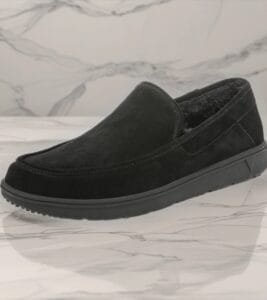
✔ Premium suede upper
✔ Warm faux shearling lining
✔ may help reduce fatigue on hard floors
✔ More supportive than traditional slippers
✔ Stylish enough to wear outside briefly
✘ Available only in medium width
✘ Premium price compared to standard slippers
✘ Some users find the initial fit firm until broken in
✘ Warm lining may feel too hot in warmer climates
The Gustavo feels very different from a typical department store slipper.
Instead of sinking into soft memory foam, your foot rests on a supportive orthopedic footbed designed to keep the arch properly aligned. Many owners report less foot, leg, and back fatigue after wearing them around the house, though some mention a short break-in period because the support is firmer than they’re used to. 1
This is where the Gustavo really stands out.
Features include:
For people dealing with chronic pain, wearing supportive slippers instead of going barefoot can help reduce stress on the feet and lower joints throughout the day.
The Gustavo generally fits true to size.
The toe box offers reasonable room, but this slipper is built on a medium-width platform. People with very wide or swollen feet may find it snug, especially because of the warm shearling lining. 2
The premium suede upper and sturdy rubber outsole are built to last longer than many inexpensive slippers.
Unlike soft foam-only slippers that flatten over time, the orthopedic footbed maintains its supportive shape much longer with normal household use.
The Gustavo costs more than an average slipper, but you’re paying for orthopedic support rather than simply soft cushioning.
If you spend several hours each day at home, it can help maintain the support your walking shoes provide instead of losing that benefit once they come off.
The Vionic Gustavo Slipper is one of the best supportive house slippers we’ve reviewed for men living with chronic foot pain.
Its combination of orthopedic arch support, deep heel cup, durable outsole, and removable footbed makes it an strong option to consider for people who need support from the moment they get out of bed until they go to sleep.
Its biggest limitation is the medium-width fit. Men with significantly swollen or extra-wide feet may be better served by a roomier slipper.
Yes. Its supportive arch and deep heel cup help reduce strain on the plantar fascia and provide more support than traditional memory foam slippers.
Yes. The durable rubber outsole is designed for indoor use and short trips outdoors, such as getting the mail or walking the dog.
Yes. The removable footbed allows many custom orthotics to fit comfortably. 5
Yes. The structured support can help reduce fatigue and improve comfort for many people with chronic foot, knee, hip, and back pain.
No. The Gustavo is primarily offered in medium width, which is its biggest drawback for people with swollen or extra-wide feet. 6
The Vionic Gustavo Slipper proves that recovery doesn’t stop when you walk through the front door.
If you’ve invested in supportive footwear for chronic pain, wearing an orthopedic slipper at home helps keep that support working throughout the day. While it isn’t the best choice for extra-wide feet, it’s an outstanding recovery slipper for men who want comfort, stability, and lasting arch support.
Disclaimer
I reviewed the features described for the Vionic Gustavo Slipper with the questions that matter most to me as someone living with neuropathy, chronic pain, and mobility limitations: Is the base likely to feel predictable? Is the heel secure? Are there useful width or closure options? Could the cushioning or geometry create a tradeoff for balance? Product details and availability can change, so verify the exact model, size, and return policy before buying.
No. This review is based on my independent product research and my experience evaluating footwear features for people with pain, neuropathy, balance concerns, swelling, and mobility limitations. I do not claim hands-on use when I have not personally tested a shoe.
No. Shoes may affect comfort, fit, or stability, but they do not diagnose, cure, or treat medical conditions. Persistent pain, numbness, swelling, skin changes, or fall risk should be discussed with a qualified healthcare professional.
Try it indoors on a clean surface while the return window is open. Check toe room, heel movement, pressure points, traction, and stability for more than a few minutes. If you use an orthotic or brace, test it with the shoe rather than relying on a width label alone.
Based on my research, the Vionic Gustavo Slipper deserves consideration for shoppers focused on indoor support, cushioning, fit and limitations. I would not call it universally “best,” and I would not promise medical relief. The honest decision comes down to whether its design matches your foot shape, gait, support needs, and ability to return it if the fit is wrong.
Try new shoes indoors while the return window is open. Stop if a shoe causes pain, numbness, skin irritation, new pressure, or a feeling of instability.
I am not a physician, nurse, podiatrist, or other medical professional. Rejuva Sole provides educational information based on my lived experience and hours of product research. It is not medical advice, diagnosis, or treatment. Ask a qualified healthcare professional about symptoms, fall risk, circulation problems, braces, orthotics, or footwear needs specific to you.
Affiliate reminder: I may earn a commission from qualifying purchases made through links on this page, at no additional cost to you. I do not let commissions determine what I say about a product.