REJUVA SOLE™
Rise Above the Ache™
Rise Above the Ache™
Affiliate disclosure: As an Amazon Associate, I earn from qualifying purchases. If you buy through a link on this page, I may earn a commission at no additional cost to you. Affiliate relationships do not change my conclusions.
How this review was created: I have not personally wear-tested this model. This is my independent, research-based review after spending hours comparing manufacturer and retailer information, design features, sizing and width details, and the practical needs of Rejuva Sole readers.
My short take: The New Balance 928v3 is worth comparing if your priorities include motion control, wide sizing, walking stability and fit. It is not a medical device, fit is individual, and I would only keep it after a careful indoor trial.
Important limitation: A structured shoe may improve guidance for some walkers, but it cannot treat neuropathy and may feel too firm or corrective for others.
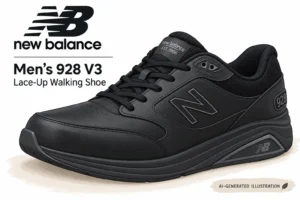
Finding a supportive walking shoe is challenging when you live with neuropathy, arthritis, diabetes, or chronic foot pain. Many athletic shoes focus on softness or style, but the New Balance 928v3 takes a different approach. It was designed to provide exceptional stability, dependable support, and a roomy fit for people who spend long hours on their feet or need extra confidence while walking.
At Rejuva Sole, I evaluate every shoe using my Stable Anchor Footwear principles: a stable base, secure heel support, roomy toe box, controlled cushioning, orthotic compatibility, and overall comfort. The New Balance 928v3 continues to be one of the strongest performers in these categories.
The New Balance 928v3 may not be the best choice if you:
The New Balance 928v3 has earned a loyal following because it consistently provides what many supportive shoes fail to deliver—a stable, dependable walking platform with generous room for a wide variety of foot shapes.
For people living with neuropathy, balance concerns, or swollen feet, stability often matters more than ultra-soft cushioning, and that’s exactly where the 928v3 excels.
The first thing I notice about the 928v3 is its incredibly stable platform.
Its broad outsole may help reduce side-to-side movement and creates a confident walking experience, especially for people who struggle with balance or fatigue.
A stable foundation is one of the most important features I look for when evaluating supportive footwear.
The 928v3 includes New Balance’s ROLLBAR® stability technology, which may help reduce excessive rear-foot movement and encourages better alignment while walking.
For many people with overpronation or balance concerns, this additional support can help create a smoother, more controlled stride.
One of the shoe’s greatest strengths is its generous fit.
The roomy toe box may help reduce pressure on sensitive toes while providing space for bunions, hammertoes, and mild swelling.
If you’ve ever felt cramped in a standard walking shoe, you’ll appreciate the additional room.
The 928v3 is available in several widths, including Extra Wide (4E).
This makes it one of my favorite recommendations for people who struggle to find supportive shoes that actually fit.
The removable insole provides room for many custom orthotics or diabetic inserts.
Combined with the shoe’s extra depth, this makes it an strong option to consider for people requiring customized foot support.
The cushioned midsole absorbs impact while maintaining the stability needed for everyday walking.
Rather than feeling overly soft or unstable, the cushioning provides a balanced, supportive ride that many people find comfortable for extended wear.
Unlike lightweight mesh running shoes, the leather upper provides additional structure and long-term durability.
It also makes the shoe easier to clean and well suited for daily walking.
✔ Outstanding stability
✔ Excellent motion control
✔ Available in multiple widths, including Extra Wide
✔ Roomy toe box reduces pressure
✔ Extra depth accommodates orthotics
✔ Durable leather construction
✔ Comfortable for all-day walking
✔ Excellent long-term durability
✘ Heavier than many athletic shoes
✘ Leather upper is less breathable than mesh
✘ Conservative appearance may not appeal to everyone
Affiliate Disclosure: As an Amazon Associate I earn from qualifying purchases
The New Balance 928v3 remains one of the best supportive walking shoes available for people who value stability above everything else.
While it isn’t the lightest or most modern-looking shoe, it consistently delivers where it matters most: support, roominess, durability, and confidence with every step.
For people living with neuropathy, diabetes, arthritis, swollen feet, or balance concerns, it provides one of the most dependable walking experiences available today.
At Rejuva Sole, I don’t recommend shoes based on popularity alone.
Every recommendation follows my Stable Anchor Footwear philosophy and is carefully evaluated for:
My goal is to help you understand why a shoe may be right for your feet, so you may make an informed decision with confidence.
Because supportive footwear isn’t about buying the most expensive shoe.
It’s about
I reviewed the features described for the New Balance 928v3 with the questions that matter most to me as someone living with neuropathy, chronic pain, and mobility limitations: Is the base likely to feel predictable? Is the heel secure? Are there useful width or closure options? Could the cushioning or geometry create a tradeoff for balance? Product details and availability can change, so verify the exact model, size, and return policy before buying.
No. This review is based on my independent product research and my experience evaluating footwear features for people with pain, neuropathy, balance concerns, swelling, and mobility limitations. I do not claim hands-on use when I have not personally tested a shoe.
No. Shoes may affect comfort, fit, or stability, but they do not diagnose, cure, or treat medical conditions. Persistent pain, numbness, swelling, skin changes, or fall risk should be discussed with a qualified healthcare professional.
Try it indoors on a clean surface while the return window is open. Check toe room, heel movement, pressure points, traction, and stability for more than a few minutes. If you use an orthotic or brace, test it with the shoe rather than relying on a width label alone.
Based on my research, the New Balance 928v3 deserves consideration for shoppers focused on motion control, wide sizing, walking stability and fit. I would not call it universally “best,” and I would not promise medical relief. The honest decision comes down to whether its design matches your foot shape, gait, support needs, and ability to return it if the fit is wrong.
Try new shoes indoors while the return window is open. Stop if a shoe causes pain, numbness, skin irritation, new pressure, or a feeling of instability.
I am not a physician, nurse, podiatrist, or other medical professional. Rejuva Sole provides educational information based on my lived experience and hours of product research. It is not medical advice, diagnosis, or treatment. Ask a qualified healthcare professional about symptoms, fall risk, circulation problems, braces, orthotics, or footwear needs specific to you.
Affiliate reminder: I may earn a commission from qualifying purchases made through links on this page, at no additional cost to you. I do not let commissions determine what I say about a product.