REJUVA SOLE™
Rise Above the Ache™
Rise Above the Ache™
Research-based KURU ATOM Slip-On review for women with neuropathy: stretchy NOVAKNIT comfort, easy entry, support, width limits, and honest tradeoffs.
Affiliate disclosure: Rejuva Sole may earn a commission if you buy through a qualifying link on this page, at no additional cost to you. Affiliate relationships never decide whether I recommend a shoe.
How this review was created: This is a research-based review. I have not personally worn the KURU ATOM Slip-On. I checked KURU’s current product information, construction, fit details, available widths, intended uses, replacement model, and return information, then evaluated the shoe using Rejuva Sole’s Stable Anchor Footwear principles. Specifications and availability were last checked September 12, 2026.
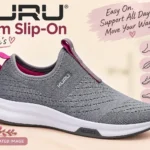
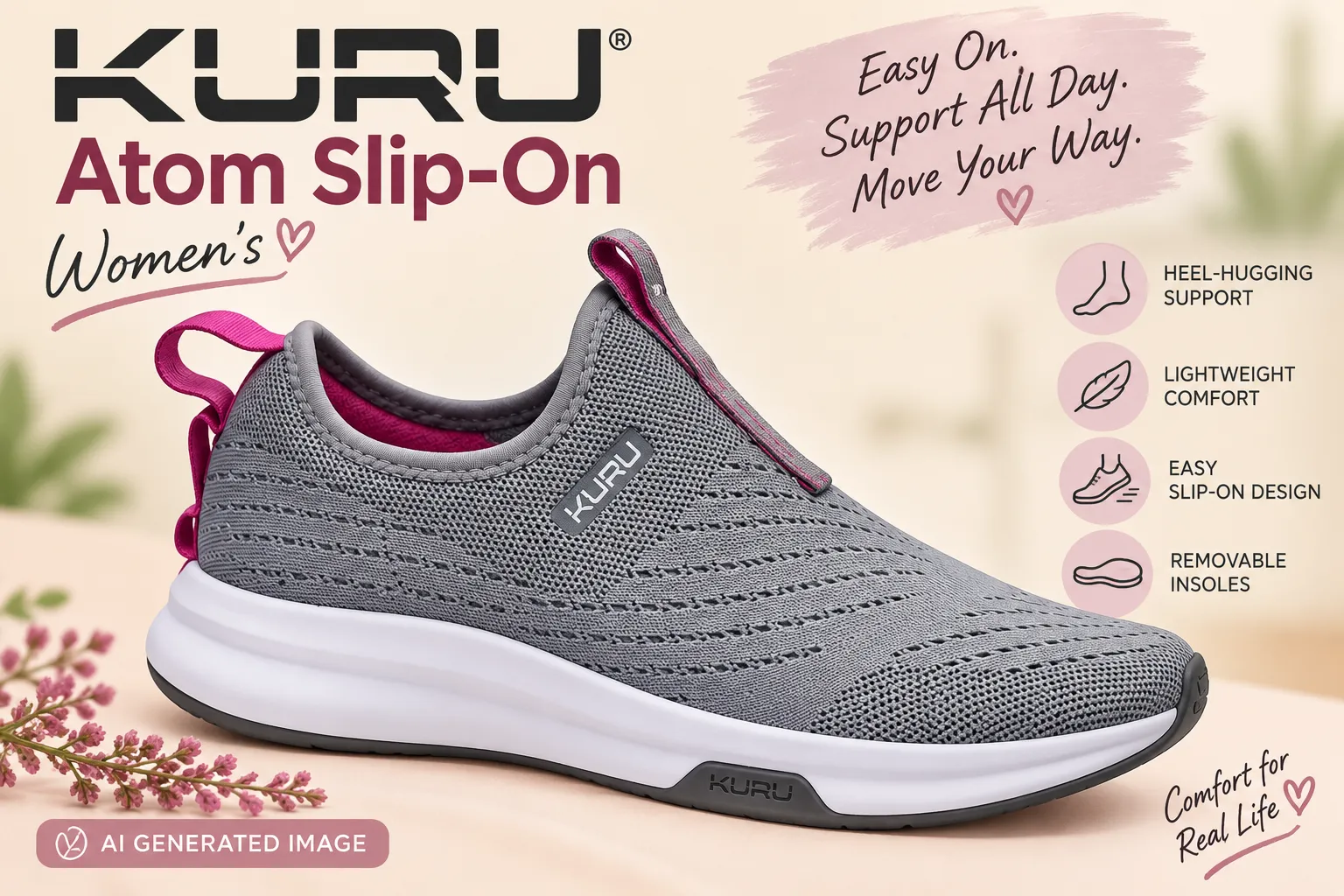
The women’s KURU ATOM Slip-On combines a lace-free design with a soft, breathable NOVAKNIT upper that moves with the foot. That is why it caught my attention for neuropathy. When skin is sensitive, toes are tender, or bending and tying laces is difficult, a forgiving upper and easy entry can be genuinely useful.
But stretch and convenience are only half the story. This shoe is currently offered in Medium width only, and its laceless fit cannot be adjusted like a traditional lace-up. KURU also labels the original ATOM Slip-On “Last Chance,” because the newer ATOM 2 Slip-On has arrived. The original can still be a good match for carefully selected feet, but it is not a universal neuropathy shoe.
Best for: Women who fit a Medium width and want a soft, breathable, easy-on sneaker for sensitive feet, casual walking, travel, or long periods of standing.
Skip it if: You need Wide or Extra Wide sizing, substantial extra depth, a highly adjustable closure, proven AFO compatibility, or maximum motion control for serious balance problems.
| Current specification | What it may mean in real life |
|---|---|
| Upper | Soft, breathable NOVAKNIT with a seamless, sock-like feel. |
| Closure | Laceless slip-on with front and rear pull tabs. |
| Width | Medium only when checked; no Wide or Extra Wide option listed. |
| Heel-to-toe drop | 8 mm, placing the heel moderately above the forefoot. |
| Outsole | Rubber outsole intended to add durability and traction. |
| Support system | KURUSOLE heel cradle, KURUCLOUD foam, and contoured ULTIMATE INSOLE. |
| Best uses listed by KURU | Travel, all-day standing, and everyday casual wear. |
| Weight | KURU’s current page conflicts: Quick Facts says 10.6 oz, while its comparison lists 9.2 oz for a women’s size 8. Treat the exact weight as unconfirmed. |
| Status | Listed as “Last Chance” when checked; sizes and colors may become limited. |
| Return information | KURU advertised a 91-day Feel Better Promise. Confirm current eligibility and shoe-condition rules before wearing outdoors. |
Neuropathy can change how a person feels pressure, heat, rubbing, and movement inside a shoe. A shoe that looks soft is not automatically safe, but a gentle upper can reduce one common problem: hard material pressing against tender toes, bunions, bony areas, or the top of the foot.
KURU describes the NOVAKNIT upper as soft, breathable, flexible, and able to move with the body. The upper is also described as seamless and sock-like. Those features make the ATOM Slip-On more appealing than a stiff leather slip-on for women whose feet are sensitive to firm overlays or rough pressure points.
The easy-on design matters too. Front and back pull tabs may help someone who has reduced hand strength, arthritis, back pain, or trouble bending. There are no laces to tie. For the right wearer, that can make the difference between a shoe that stays in the closet and one that is practical every day.
A stretchy upper can feel wonderful around sensitive areas, but stretch is not the same as width, depth, or adjustability. The ATOM Slip-On must hold the foot through its shape and elastic knit because it has no laces or strap to tighten. If the shoe is too loose, the heel may lift or the foot may slide. A numb foot may not immediately notice the friction that sliding creates.
The KURUSOLE system is designed to cup the heel, and the knit is meant to provide both flexibility and structure. That combination may feel secure on a foot that matches the shoe well. It cannot compensate for the wrong size or shape. Women with a narrow heel, major swelling, a very high instep, or different sizes between feet should pay special attention during the indoor trial.
The biggest limitation is simple: KURU currently lists the women’s ATOM Slip-On in Medium width only. The upper may stretch around mild pressure areas, but it does not turn a Medium shoe into a true Wide or Extra Wide shoe. Stretch also does not create the extra internal depth needed for severe edema, thick orthotics, protective dressings, or prominent deformities.
The toes should lie flat and spread naturally without pressing against the front or top. The heel should stay seated without the toes gripping to keep the shoe on. Do not solve a width problem by buying a shoe so long that the foot slides forward and backward.
The ATOM Slip-On uses KURUCLOUD foam underfoot and KURU’s contoured heel-and-arch system. KURU describes the original model as having strong support with slightly less cushioning than the newer ATOM 2 Slip-On. The 8 mm drop is moderate rather than flat, and the rubber outsole adds a more durable contact surface than exposed foam alone.
For neuropathy, more cushioning is not always better. Cushion should soften hard ground without making the shoe feel vague, unstable, or disconnected from the floor. The ATOM Slip-On may suit a woman who likes noticeable heel and arch contour. It may be uncomfortable if that contour presses against a sensitive arch or does not match the heel shape.
This is not a dedicated motion-control walking shoe, and KURU does not publish independent base-width, torsional-stiffness, or slip-resistance test results for this model. If balance loss is a major concern, compare it with a more substantial lace-up shoe and test the slip-on near a stable support or with professional guidance.
The seamless, breathable knit is one of the shoe’s strongest neuropathy-friendly features on paper. Fewer prominent upper seams may mean fewer obvious rubbing points, and airflow may help reduce heat buildup. However, “seamless upper” does not mean every part of the interior is guaranteed smooth for every foot.
Before wearing, run your hand around the inside. Check the heel lining, edges of the insole, pull-tab attachments, and any place where material changes. Remove any debris. Wear the socks recommended for your situation, and inspect the tops, bottoms, sides, heels, and spaces between the toes after each short trial.
KURU says its ULTIMATE INSOLE can be removed for a custom orthotic, but the rounded KURUSOLE heel shape tends to work best with an orthotic that has a compatible rounded underside. A thick or square-backed insert may sit unevenly, lift the heel, or take away toe volume.
The ATOM Slip-On is not presented as an AFO shoe. A brace often needs a wide opening, extra depth, adjustable fastening, and more width than this Medium-only laceless design provides. Test the exact orthotic or brace in the exact shoe; do not rely on the fact that the upper stretches.
KURU may recommend an adjustment period for its contoured support. Adjustment should never mean ignoring skin irritation, new pressure, pain, or unsafe balance.
The original ATOM Slip-On and the newer ATOM 2 Slip-On are separate models. Both are laceless, use NOVAKNIT uppers, come in Medium width, and are listed at the same regular price when checked. The original favors a lower, somewhat lighter design. The ATOM 2 adds more cushioning, a deeper heel cradle, higher-rebound foam, a softer zoned-knit upper, internal midfoot structure, and a padded heel and tongue.
| Feature | ATOM Slip-On | ATOM 2 Slip-On |
|---|---|---|
| Current status | Last Chance | Newer model |
| Width | Medium | Medium |
| Heel-to-toe drop | 8 mm | 10 mm |
| Cushion height | 22 mm heel / 14 mm toe | 28 mm heel / 18 mm toe |
| Foam | KURUCLOUD | KURUCLOUD+ with higher rebound |
| Heel support | KURUSOLE | Advanced KURUSOLE with deeper heel cupping |
| Upper | Soft, breathable NOVAKNIT | Softer zoned NOVAKNIT with stretch and structure |
| Main advantage | Lower profile and simple sock-like feel | More cushioning, heel support, and internal structure |
| Main tradeoff | Less cushioning and older limited-availability model | Heavier and higher underfoot |
On paper, I would usually lean toward the ATOM 2 Slip-On for a woman who wants the easiest current KURU slip-on with more cushioning, a padded heel, and additional midfoot structure. Those upgrades may help the foot feel more contained than it does in a very soft knit shell.
I would still consider the original ATOM Slip-On for someone who fits Medium, prefers a lower platform, wants the soft sock-like upper, and finds a remaining size at an attractive price. Neither model comes in Wide, and neither should be treated as a substitute for a true extra-depth or brace-compatible shoe.
The KURU ATOM Slip-On earns a place in the women’s neuropathy guide because it solves two practical problems well: it is easy to put on, and its soft, breathable NOVAKNIT upper may feel gentler around sensitive spots than a stiff shoe.
Its limits are just as important. Medium width only, no adjustable closure, no established AFO fit, no published independent stability measurements, and shrinking availability keep it from being a broad recommendation. The contoured heel and arch are helpful only when they match the wearer without creating pressure.
Bottom line: A promising easy-on option for carefully selected Medium-width feet—not a replacement for true wide, extra-depth, or prescribed protective footwear.
See the full women’s neuropathy and neurological footwear guide to compare the ATOM Slip-On with wider, more adjustable, and more stable choices.
No. This is a research-based review using current KURU information and Rejuva Sole’s Stable Anchor Footwear principles.
Yes. KURU describes NOVAKNIT as soft, breathable, flexible, and able to move with the foot. That can reduce pressure around some sensitive areas, but it does not turn the Medium shoe into a Wide or Extra Wide.
No Wide option was listed when checked. The women’s model was available in Medium only.
KURU describes it as easy to slip on and provides front and rear pull tabs, but it is not marketed as a certified hands-free step-in shoe. Some wearers may still need to use a hand or shoehorn.
KURU allows the insole to be removed, but the rounded heel system works best with a compatible orthotic shape. A thick insert can reduce depth and change heel hold, so test the exact combination indoors.
The heel cradle and rubber outsole may feel supportive, but the laceless knit fit is less adjustable than a lace-up. KURU does not publish base-width or motion-control measurements for this model. Anyone with a fall history, shuffle gait, weakness, or reduced toe clearance should use extra caution.
Rejuva Sole provides educational footwear information, not medical advice, diagnosis, treatment, or a guarantee of pain relief or fall prevention. Shoes cannot treat or cure neuropathy. Ask a qualified clinician, podiatrist, physical therapist, or orthotist about loss of protective sensation, circulation problems, wounds, sudden swelling, falls, braces, orthotics, or prescribed footwear.