REJUVA SOLE™
Rise Above the Ache™
Rise Above the Ache™
Affiliate disclosure: Rejuva Sole may earn a commission if you buy through a qualifying link on this page, at no additional cost to you. Affiliate relationships never decide whether I recommend a shoe.
How this review was created: This is a research-based review. I did not personally test the KURU DRAFT 2 Women’s Slipper. I compared current manufacturer specifications with independent testing where available and evaluated the shoe through Rejuva Sole’s Stable Anchor Footwear principles. Specifications and availability were last checked August 30, 2026.
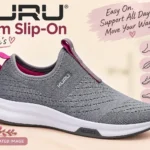
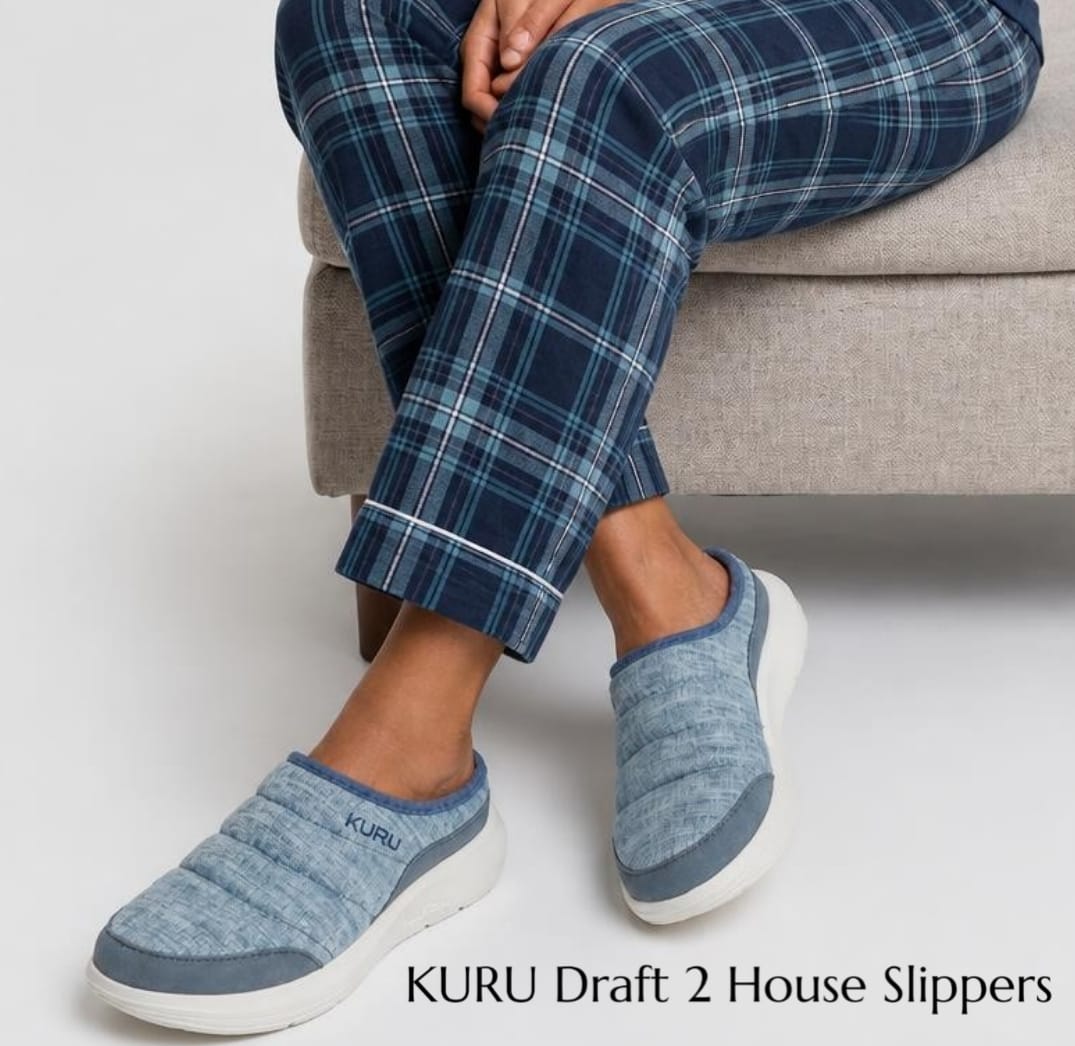
The KURU DRAFT 2 is meant to replace the flat, flimsy house slipper with something more structured. It combines KURU’s heel-shaped underfoot system with an 8 mm drop, a fleece-like lining, a soft upper, and a very light 7.4 oz build.
Its defining advantage is also its defining drawback: the backless design is easy to step into, but it does not enclose or lock the heel the way a full shoe does. For plantar-fasciitis comfort around the house, that may be a useful compromise. For shuffling, poor balance, neuropathy, or stairs, the loose rearfoot deserves serious caution.
°°NOTE: Buy Directly from Kuru. Prices Subject to change
| Current specification | What it means in real life |
|---|---|
| Use | Recovery, around the house, and cozy comfort according to KURU. |
| Style | Backless slip-on slipper. |
| Weight | 7.4 oz / about 210 g for the women’s model. |
| Drop | 8 mm according to KURU. |
| Width | Medium only. |
| Materials | Textile, microsuede, and foam. |
| Upper | Soft and breathable with fleece-like lining. |
| Support system | KURUSOLE, KURUCLOUD, and ULTIMATE INSOLE components. |
| Price when checked | $119; price can change. |
KURU says DRAFT 2 is more than 40 percent lighter than the original DRAFT and uses an updated fit and arch shape. The product page does not present it as certified slip-resistant footwear.
The KURU DRAFT 2 Women’s Slipper may be a weaker choice if you:
Morning heel pain can make a barefoot walk across hard flooring miserable. AAOS includes supportive shoes, thicker soles, cushioning, heel pads, and orthoses among conservative comfort measures for plantar fasciitis. DRAFT 2 offers a shaped footbed and modest drop in a lighter house-slipper form.
The honest question is whether the convenience of a backless design is worth the loss of heel containment. Someone with steady walking and good foot clearance may enjoy it. Someone who shuffles or steps backward out of footwear may be safer in an enclosed slipper.
At 7.4 oz, DRAFT 2 is much lighter than KURU’s LOFT moccasin. It is easy to put on without bending to manage laces or a heel collar.
A backless slipper can slide, lift, or require toe gripping to keep it on. That can be tiring and may reduce security during turns, stairs, or quick movements.
KURU builds the DRAFT 2 around its usual heel cradle, cushioning layer, and contoured insole. That gives the slipper more shape than a flat foam scuff.
Built-in contour is not customized. If the arch feels forceful, the heel sits on an edge, or the slipper causes burning or numbness, more break-in is not automatically the answer.
KURU emphasizes a flexible sole and natural stride. That can make short household walking feel less stiff.
People with painful big-toe arthritis or who depend on a rocker or stiff forefoot may prefer less bend. Flexibility is a feature, not a universal benefit.
The soft upper may forgive minor shape differences, and the open back removes some rearfoot pressure.
It does not create a true Wide fit. A broad forefoot, edema, bunion, or high-volume foot can still spill over the footbed or press against the upper.
The fleece-like lining provides cozy indoor comfort.
Warmth can hide moisture or increase heat for sensitive feet. People with neuropathy should inspect the lining for folds, debris, seams, and dampness and check their skin after wear.
KURU’s general guidance says its insoles can be replaced by a compatible rounded-heel orthotic.
In a backless slipper, a thicker orthotic may lift the foot and make retention worse. DRAFT 2 should not be assumed to accommodate an AFO or bulky brace.
DRAFT 2 may be useful as an at-home alternative to barefoot walking or a flat slipper. Its shaped heel area, arch contour, and 8 mm drop may feel supportive for some people.
It does not treat plantar fasciitis, and its backless design may cause gripping or slippage. If heel pain persists, footwear should be only one part of the plan.
A covered toe offers more protection than an open slide, but the slipper is not extra-depth diabetic footwear. Reduced sensation makes fit checks, skin inspection, clean lining, and short initial wear especially important.
This is the highest-caution group for DRAFT 2. The open heel can come off during a shuffle, transfer, turn, or stair step. A fully enclosed adjustable slipper is often the more secure format.
Easy step-in access may help when hands, hips, or the back make laces difficult. The user still needs enough foot control to enter the slipper fully and keep it on without curling the toes.
I am not assigning a numeric score because Tammy did not personally test DRAFT 2 and this review has no validated scoring method.
My honest verdict: DRAFT 2 is a thoughtful house-slipper option for a steady walker with Medium-width feet who wants more heel and arch structure than a flat scuff. It may be especially useful for avoiding barefoot steps on hard floors.
It is not my first choice for a shuffler, someone with foot drop, high fall risk, severe neuropathy, edema, or a wide foot. The open heel is too important to hide behind the words “supportive slipper.”
At Rejuva Sole, I do not simply recommend popular shoes or repeat a manufacturer’s pain-relief promise.
I evaluate every model using the same Stable Anchor Footwear principles: a steady base, secure heel support, enough room for the toes, controlled cushioning, realistic orthotic compatibility, and comfort that does not ignore balance or mobility. This review clearly separates manufacturer specifications from independent findings and does not claim personal testing that did not happen.
My goal is simple: educate first and recommend second. The right shoe is not the one with the strongest advertising. It is the one that fits your actual feet and helps you move as comfortably and confidently as your circumstances allow.
No. This is a research-based review using current KURU specifications and Rejuva Sole’s footwear criteria.
It may feel more supportive than barefoot walking or a flat slipper because of its shaped footbed and 8 mm drop. It does not treat plantar fasciitis.
No. KURU listed the women’s DRAFT 2 in Medium only when checked.
Not automatically. The open heel can lift or slide during shuffling, turns, transfers, and stairs. A full-back adjustable slipper may be safer.
KURU’s general guidance allows compatible rounded-heel orthotics, but a thick device may lift the foot and make a backless slipper harder to retain.
KURU describes DRAFT 2 primarily for recovery and around-the-house use. Check the actual outsole, surface, weather, and traction needs before going outside.
Rejuva Sole provides educational footwear information, not medical advice, diagnosis, treatment, or a guarantee of pain relief or fall prevention. Footwear may support comfort, but the 2023 heel-pain clinical practice guideline does not treat an orthosis as a stand-alone short-term solution. Stop using a shoe that causes pain, numbness, skin irritation, new pressure, or instability, and ask a qualified healthcare professional about persistent heel pain, circulation problems, ulcers, fall risk, braces, orthotics, or prescribed footwear.