REJUVA SOLE™
Rise Above the Ache™
Rise Above the Ache™
Affiliate disclosure: Rejuva Sole may earn a commission if you buy through a qualifying link on this page, at no additional cost to you. Affiliate relationships never decide whether I recommend a shoe.
How this review was created: This is a research-based review. I did not personally test the KURU FLEX Via. I compared current manufacturer specifications with independent testing where available and evaluated the shoe through Rejuva Sole’s Stable Anchor Footwear principles. Specifications and availability were last checked August 30, 2026.
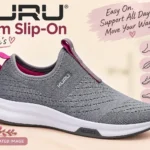
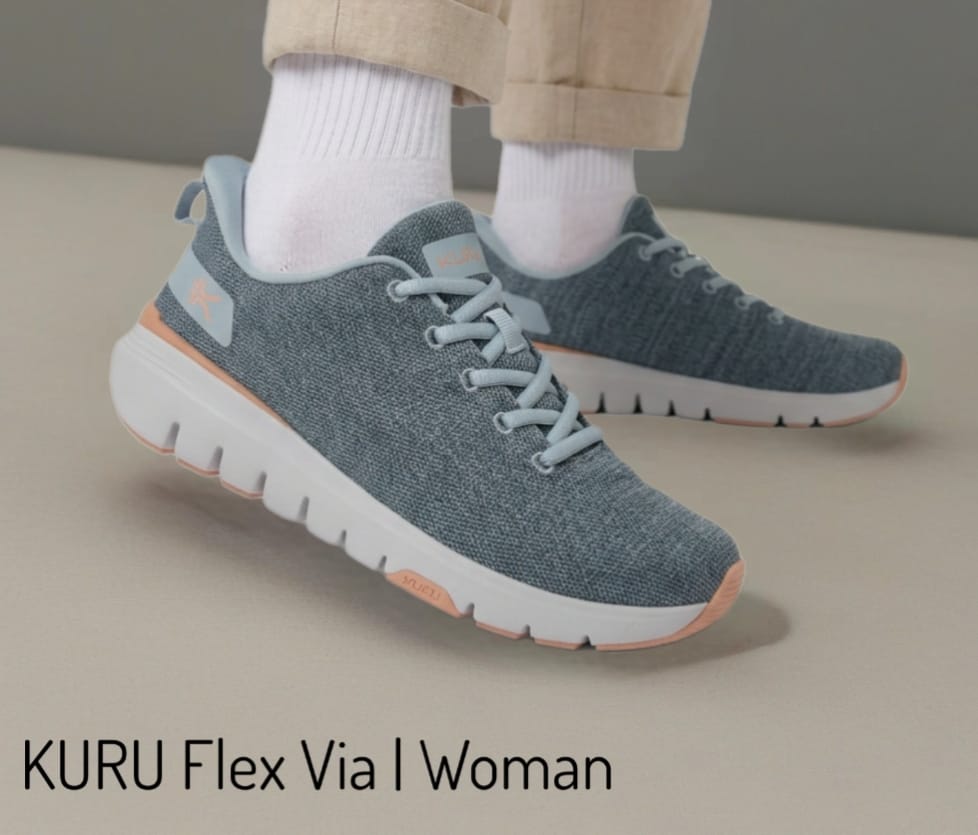
The KURU FLEX Via is an unusual mix: a very flexible forefoot paired with a firm, structured heel cup. KURU describes it as a minimalist lifestyle sneaker for walking, travel, and everyday use. Independent testing found strong rearfoot support, excellent traction, and extraordinary flexibility—but less cushioning and energy return than the marketing might lead a shopper to expect.
That combination may suit someone who dislikes stiff, bulky walking shoes yet still wants heel containment. It is not the right choice for a person whose plantar-fasciitis comfort depends on maximum shock absorption or a plush ride.
Prices Subject to Change
| Current specification | What it means in real life |
|---|---|
| Use | Walking, travel, and everyday wear. |
| Weight | Women’s 9.6 oz / 272 g; men’s 11.5 oz / 326 g according to KURU. |
| Drop | 11 mm according to KURU. |
| Widths | Medium and Wide in women’s and men’s versions. |
| Materials | Mesh upper and rubber outsole. |
| Design | Deep forefoot flex grooves, traditional tongue, minimalist styling. |
| Heel support | KURUSOLE heel cradle plus ULTIMATE INSOLE. |
| Independent traction | RunRepeat measured a strong 0.75 heel friction coefficient on its sample. |
| Independent flexibility | RunRepeat measured only 6.5 N to bend the forefoot 30 degrees. |
The official men’s weight is 11.5 oz; RunRepeat measured 11.4 oz in a men’s size 9. Its lab classified the ride as firm, low in shock absorption, highly flexible, and strongly supportive at the heel.
The KURU FLEX Via may be a weaker choice if you:
Most heel-support shoes are fairly rigid. FLEX Via separates the jobs: its KURUSOLE component secures the rearfoot while deep grooves let the forefoot bend easily. That may feel natural during walking while still reducing the loose, slipper-like motion that can aggravate some heels.
The important counterpoint is cushioning. Independent testing found only moderate impact protection and a firm, dull ride. FLEX Via should be chosen for support, grip, and flexibility—not because someone expects a cloud-soft plantar-fasciitis shoe.
RunRepeat gave the heel counter a stiff 4-out-of-5 result and found the rearfoot structure solid. At the same time, the shoe was about 50 percent more flexible than the average walking shoe in its test set.
That can be a useful balance for everyday walking. It can also place more bending demand on the forefoot than a rocker shoe. People with painful big-toe arthritis or who need a stiff forefoot should test carefully.
KURU includes its KURUCLOUD midsole and ULTIMATE INSOLE, but independent measurements found low shock absorption and a firm feel. Some people with plantar fasciitis prefer that planted sensation because it does not wobble.
Others need more impact protection under the heel. Firm is not automatically supportive, and soft is not automatically unstable. The correct feel is individual.
The independent 0.75 grip result was one of FLEX Via’s strongest findings, including performance on wet concrete and tile in the lab.
No road shoe can prevent slips, and this product is not described as certified occupational slip-resistant footwear. Worn tread, contaminants, and the walking surface still matter.
Medium and Wide versions are available. Independent molding found the tested medium slightly narrower than average at its broadest interior point, while toe-box height was generous.
People with wide feet or bunions should start by comparing the Wide. There is no X-Wide option, and a tall toe box does not guarantee enough width at the big toe.
The insole is removable, but both KURU and independent testing note that the insole shape complements the rounded KURUSOLE cradle. Replacing it can be tricky.
A rounded custom orthotic may work. A square-backed or bulky device can rock, lift the heel, or defeat the intended heel support.
The women’s version is reasonably moderate at 9.6 oz, while the men’s 11.5 oz is heavier than the average in the independent walking-shoe sample. Breathability tested as moderate rather than exceptional.
That may be fine for errands and indoor work, but people who fatigue easily or overheat should include those factors in the decision.
FLEX Via may suit a person who wants heel containment, arch contour, grip, and forefoot flexibility. It is especially interesting for someone who finds very soft shoes unstable.
It is not a maximum-cushion shoe. If hard floors sharply increase heel pain, its lower shock absorption may be the deciding drawback. Footwear should not be used as the only treatment.
The easy forefoot bend may feel natural for some feet. People with painful big-toe arthritis sometimes prefer a stiffer or rockered forefoot that reduces toe bending, so flexibility is not universally beneficial.
The secure heel and strong grip are positives. The 11 mm drop and highly flexible forefoot may still feel unfamiliar. Test turns, starts, stops, and side steps near stable support, and do not treat traction as a fall-prevention guarantee.
The mesh upper, Wide option, and vertical toe space may accommodate some feet. Medium-width lab measurements were not generous, and this is not an extra-depth diabetic shoe. Check skin and pressure points after a short indoor trial.
I am not assigning a numeric score because this is a research-based review without Tammy wear testing or a validated Rejuva Sole scoring method.
My honest verdict: FLEX Via is a strong comparison shoe for someone who values firm heel support, grip, and an easy-bending forefoot more than deep cushioning. It may work well for everyday walking and standing when a soft max-cushion shoe feels too vague.
It is a weaker plantar-fasciitis choice for someone who specifically needs maximum heel shock absorption, X-Wide sizing, a low drop, or a straightforward fit with a bulky orthotic.
At Rejuva Sole, I do not simply recommend popular shoes or repeat a manufacturer’s pain-relief promise.
I evaluate every model using the same Stable Anchor Footwear principles: a steady base, secure heel support, enough room for the toes, controlled cushioning, realistic orthotic compatibility, and comfort that does not ignore balance or mobility. This review clearly separates manufacturer specifications from independent findings and does not claim personal testing that did not happen.
My goal is simple: educate first and recommend second. The right shoe is not the one with the strongest advertising. It is the one that fits your actual feet and helps you move as comfortably and confidently as your circumstances allow.
No. This review is based on current KURU specifications and independent lab testing.
No. Independent testing found a firm ride and lower shock absorption than expected. Its strengths are heel support, grip, and flexibility.
It may suit some people who want a secure heel and dislike soft, unstable-feeling foam. People who need maximum impact protection may prefer a more cushioned shoe.
Yes, KURU lists Medium and Wide for women and men. There is no X-Wide option.
The stock insole removes, but the rounded heel cradle works best with a compatible rounded orthotic. A square-backed or bulky device may not sit properly.
Independent testing found excellent grip, but KURU does not present FLEX Via as certified occupational slip-resistant footwear. No shoe can guarantee against falls.
Rejuva Sole provides educational footwear information, not medical advice, diagnosis, treatment, or a guarantee of pain relief or fall prevention. Footwear may support comfort, but the 2023 heel-pain clinical practice guideline does not treat an orthosis as a stand-alone short-term solution. Stop using a shoe that causes pain, numbness, skin irritation, new pressure, or instability, and ask a qualified healthcare professional about persistent heel pain, circulation problems, ulcers, fall risk, braces, orthotics, or prescribed footwear.