REJUVA SOLE™
Rise Above the Ache™
Rise Above the Ache™
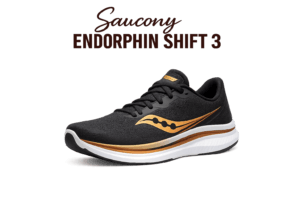
Affiliate disclosure: As an Amazon Associate, I earn from qualifying purchases. If you buy through a link on this page, I may earn a commission at no additional cost to you. Affiliate relationships do not change my conclusions.
How this review was created: I own the Saucony Endorphin Shift 3 and personally tested it for about an hour, mainly seated with my legs elevated and with a few steps. I compared it with a Hoka on my other foot. This review combines that limited firsthand trial with product research.
My short take: The Saucony Endorphin Shift 3 is worth comparing if your priorities include rocker geometry, cushioning, fit and walking stability. It is not a medical device, fit is individual, and my experience may differ from yours.
Important limitation: A rocker shoe cannot treat neuropathy, and its transition can feel unfamiliar or unstable to some walkers.
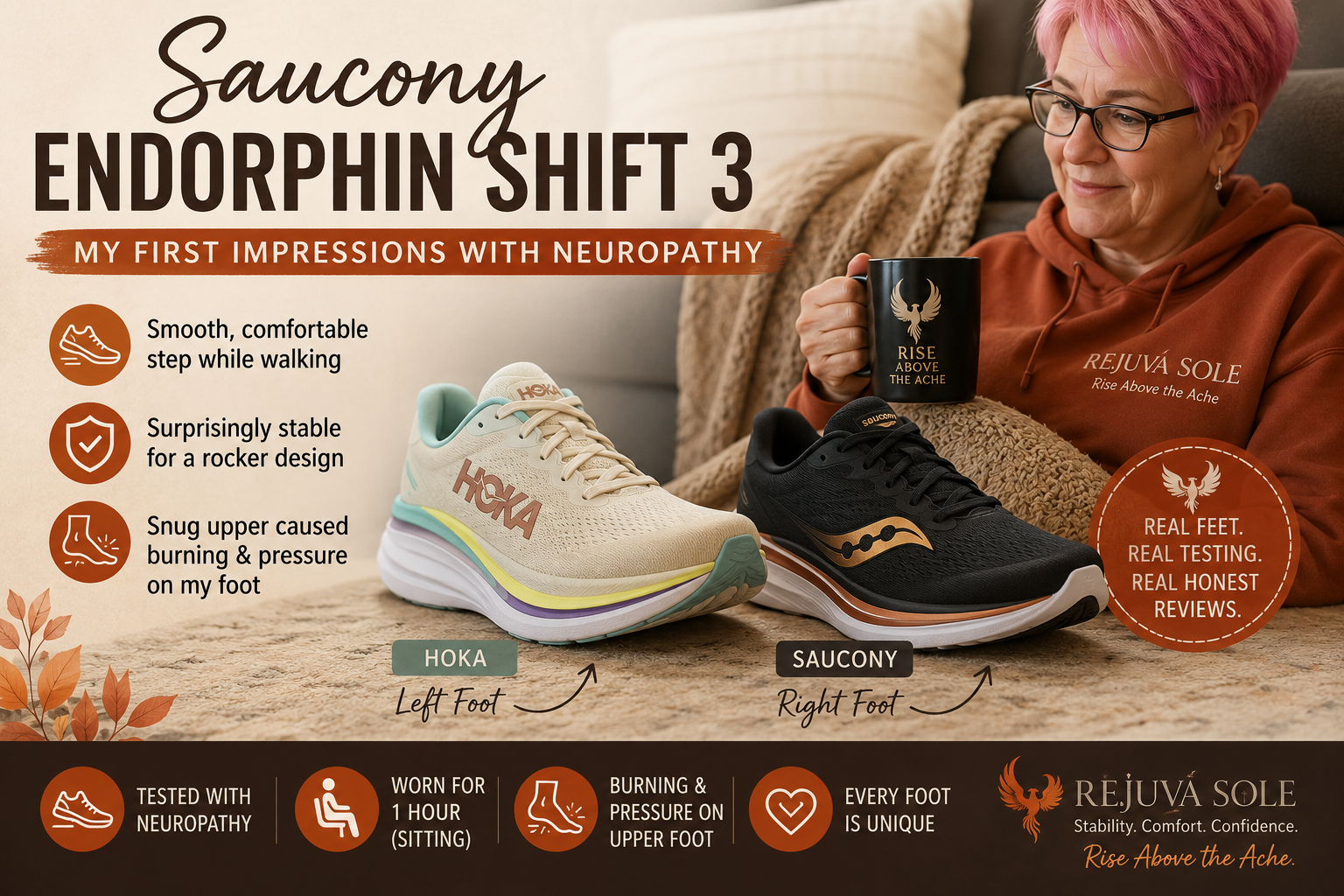
When you’re living with neuropathy, finding the right walking shoe isn’t just about comfort—it’s about finding a shoe that doesn’t make your symptoms worse. I recently tested the Saucony Endorphin Shift 3 and compared it directly to my Hoka while wearing one shoe on each foot.
I wore the Hoka on my left foot and the Saucony Endorphin Shift 3 on my right foot for about an hour. Because of my disability, I wasn’t able to walk around continuously. Instead, I kept my legs elevated while paying close attention to how each shoe felt over time.
Sometimes pressure points don’t appear immediately. That’s why I always give a shoe time before forming an opinion.
The first thing I noticed was how comfortable the Saucony felt when taking a few steps. In fact, the walking motion actually felt smoother than my Hoka.
I was also pleasantly surprised by its stability. Even with the rocker-style sole, I never felt unstable or unsafe. The shoe gave me a secure feeling while walking.
Unfortunately, after about an hour I began noticing something that many people with neuropathy understand all too well.
The upper of the shoe felt snug across the top of my foot, and I developed a burning sensation across the top of my foot and around the ball of my foot. The longer I wore them, the more noticeable the pressure became.
The Hoka on my opposite foot never developed those symptoms.
For my particular feet, the snug fit simply created too much pressure.
I don’t think this is a bad shoe at all.
In fact, I believe people who prefer a snug, performance-style fit may absolutely love it. It feels supportive, stable, and has a very comfortable ride while walking.
However, if your neuropathy is easily triggered by pressure across the top of your foot, you may want to choose a shoe with a roomier upper and toe box.
Affiliate Disclosure: As an Amazon Associate I earn from qualifying purchases
The Saucony Endorphin Shift 3 impressed me with its stability and smooth walking motion during my brief trial, but the snug upper caused pressure and burning in my feet. That fit did not work for my neuropathy.
I reviewed the features described for the Saucony Endorphin Shift 3 with the questions that matter most to me as someone living with neuropathy, chronic pain, and mobility limitations: Is the base likely to feel predictable? Is the heel secure? Are there useful width or closure options? Could the cushioning or geometry create a tradeoff for balance? Product details and availability can change, so verify the exact model, size, and return policy before buying.
Yes. I own this shoe and personally tested it for about an hour, with a Hoka on my other foot. Because of my disability, most of the trial was seated with my legs elevated, with only a few steps. This is a first-impressions review, not a long-distance or long-term wear test.
No. Shoes may affect comfort, fit, or stability, but they do not diagnose, cure, or treat medical conditions. Persistent pain, numbness, swelling, skin changes, or fall risk should be discussed with a qualified healthcare professional.
Try it indoors on a clean surface while the return window is open. Check toe room, heel movement, pressure points, traction, and stability for more than a few minutes. If you use an orthotic or brace, test it with the shoe rather than relying on a width label alone.
Based on my limited firsthand trial and research, the Saucony Endorphin Shift 3 deserves consideration for shoppers focused on rocker geometry, cushioning, fit and walking stability. I would not call it universally “best,” and I would not promise medical relief. The honest decision comes down to whether its design matches your foot shape, gait, support needs, and ability to return it if the fit is wrong.
Try new shoes indoors while the return window is open. Stop if a shoe causes pain, numbness, skin irritation, new pressure, or a feeling of instability.
I am not a physician, nurse, podiatrist, or other medical professional. Rejuva Sole provides educational information based on my lived experience and hours of product research. It is not medical advice, diagnosis, or treatment. Ask a qualified healthcare professional about symptoms, fall risk, circulation problems, braces, orthotics, or footwear needs specific to you.
Affiliate reminder: I may earn a commission from qualifying purchases made through links on this page, at no additional cost to you. I do not let commissions determine what I say about a product.